
Market segmentation for online retailing is the process of dividing your customer base into distinct groups based on shared characteristics to create more targeted and effective marketing strategies.
Quick Answer for Online Retailers:
The days of one-size-fits-all marketing are over. Today's online shoppers expect personalized experiences. The numbers prove it: 77% of marketing ROI comes from segmented campaigns, and companies with effective segmentation enjoy 10% higher profits over five years.
Many online retailers still send generic messages, wondering why conversion rates are flat. The solution isn't more traffic; it's smarter targeting. Understanding who your customers are, where they live, and how they behave online allows you to create campaigns that resonate and convert.
Modern e-commerce platforms provide a goldmine of customer data, making precise segmentation essential for staying competitive.
I'm Rob Gundermann, and I've helped numerous online retailers transform their marketing through strategic segmentation. In this guide, I'll show you how to implement proven strategies that have boosted conversion rates by 30% or more for my clients.
Explore more about market segmentation for online retailing:
Think about the last time a marketing email felt like it was written just for you. That feeling of being understood is the power of market segmentation for online retailing.
Here's the reality: 81% of executives consider segmentation crucial for growing profits, and companies with solid strategies enjoy 10% higher profit over five years. These businesses thrive because they stopped treating all customers the same.
Moving beyond generic campaigns builds a brand that truly connects with people. When you speak to what matters most to your customers—be it sustainability, convenience, or luxury—you create genuine loyalty. This targeted approach is your secret weapon for standing out and gaining a real online retail competitive advantage that competitors can't easily copy.
Properly implemented market segmentation for online retailing makes your marketing more precise, effective, and profitable.
For businesses ready to take this approach, target marketing for greater impact and higher ROI becomes inevitable.
Generic messaging has become background noise that consumers are trained to ignore. Today, they don't just prefer personalization—they demand relevance. A McKinsey study on personalization found that faster-growing companies drive 40% more revenue from personalization.
Real personalization means understanding preferences, anticipating needs, and delivering the right message at the right moment. It's showing winter coats to people in Chicago in November, not flip-flops.
E-commerce platforms make this level of personalization possible. Every click, search, and purchase creates data that helps you understand your customers. Using this data thoughtfully through segmentation allows you to recommend products people genuinely want and create website experiences that feel custom-built.
This approach is the cornerstone of effective customer engagement targeted marketing solutions. It's how you turn casual browsers into loyal customers.
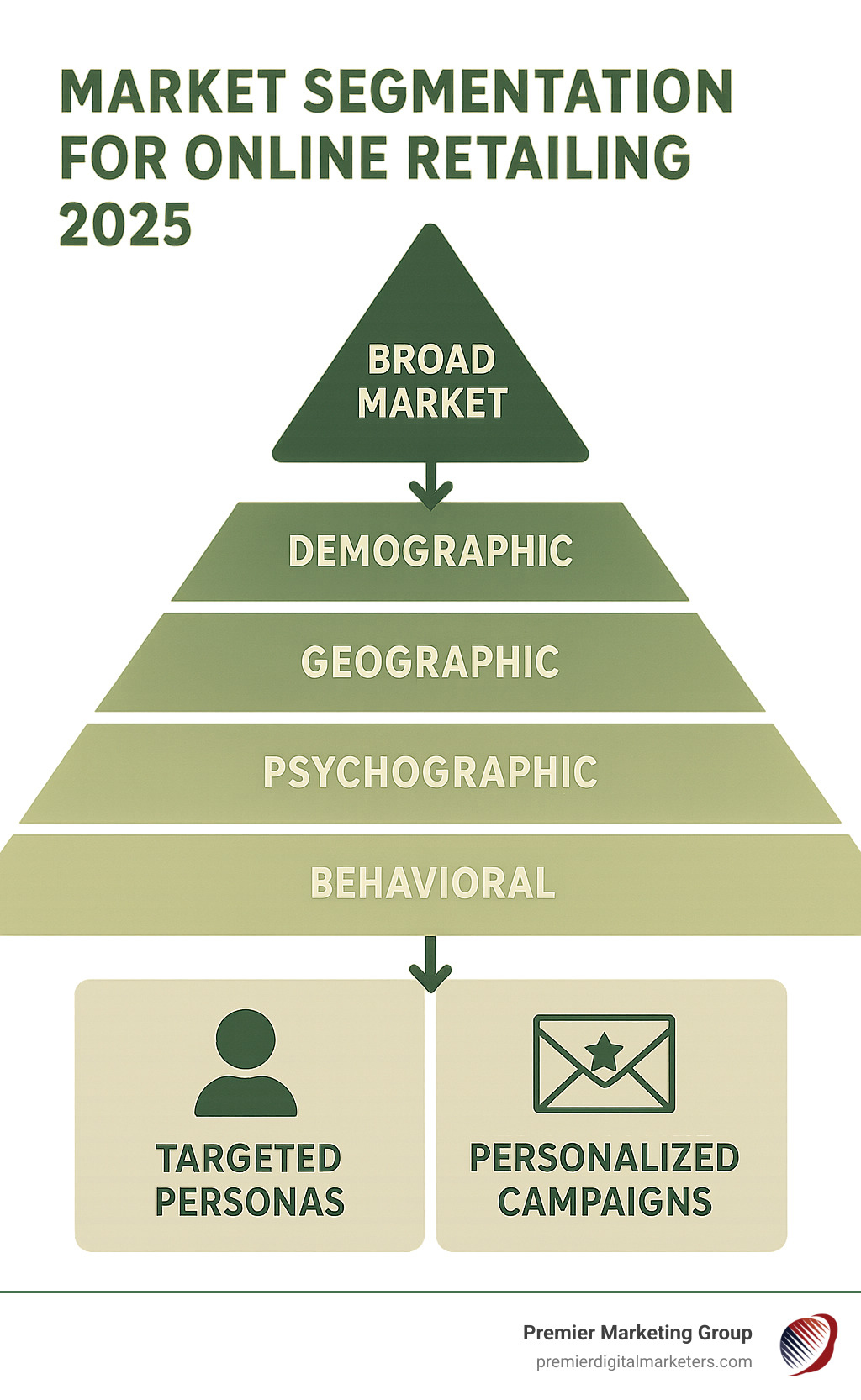
When it comes to market segmentation for online retailing, think of it as organizing your customers into clear categories. There are four foundational ways to do this, and the real magic happens when you combine them to create a complete picture of your audience.
Every successful e-commerce strategy starts with these building blocks. They will help you speak directly to the people most likely to buy from you.
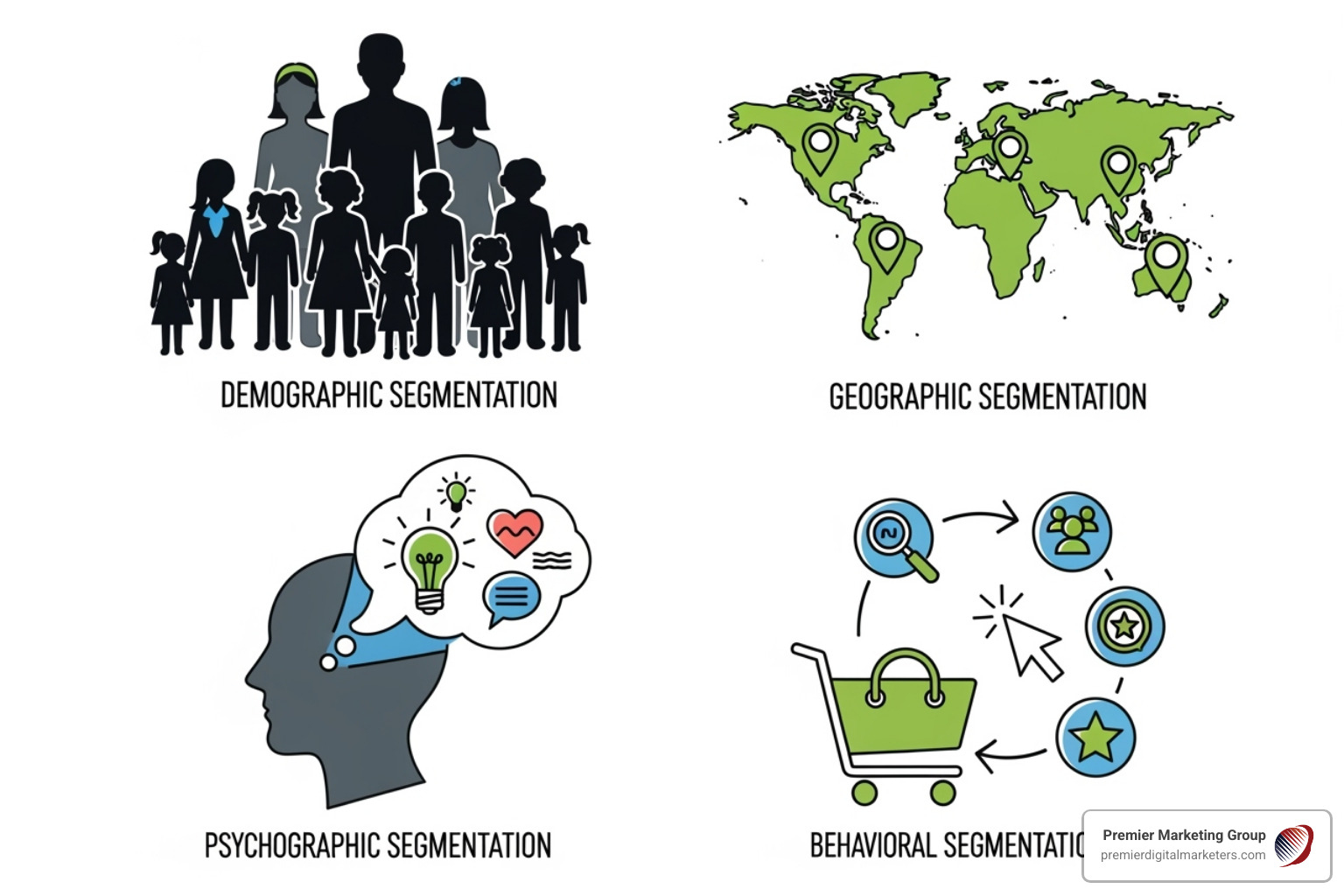
Demographic segmentation is the starting point, focusing on the basic, measurable facts of who your customers are. Key variables include:
For example, you would market anti-acne skincare to teenagers and anti-wrinkle creams to customers in their 50s. Likewise, luxury watches are best marketed to high-income professionals. This foundational understanding is essential for any Ecommerce Business.
Location is a huge factor for online retailers, affecting customer needs and purchasing habits. Key variables include:
For instance, an apparel store would promote heavy parkas to customers in Minnesota in October while showing lighter jackets to those in Georgia. Smart retailers use tools like Geo Fencing Marketing to target customers with laser precision based on their location. Your shipping data already tells you where your customers are; now you can use it strategically.
Psychographic segmentation goes beyond facts to understand what makes your customers tick. It's about the lifestyle, values, interests, and personality traits that drive their decisions. Key variables include:
For example, an outdoor gear company can target environmentally conscious consumers by emphasizing products made from recycled materials. Scientific research on consumer segmentation shows that understanding the "why" is often more predictive of future behavior than demographics alone.
For online retailers, behavioral segmentation is pure gold because it's based on actual customer actions. Key variables include:
In practice, you can send a reminder email to cart abandoners or offer exclusive rewards to loyal customers. This approach is crucial for understanding Audience Intent The Key To Effective Keyword Research In Seo, as it reveals exactly what your customers are looking for.
Creating an effective market segmentation for online retailing strategy is manageable when broken down into steps. This actionable framework transforms raw customer data into a revenue-generating strategy, taking you from initial research to ongoing refinement.
This systematic approach ensures your segmentation efforts align with your business goals and grow stronger with each iteration.
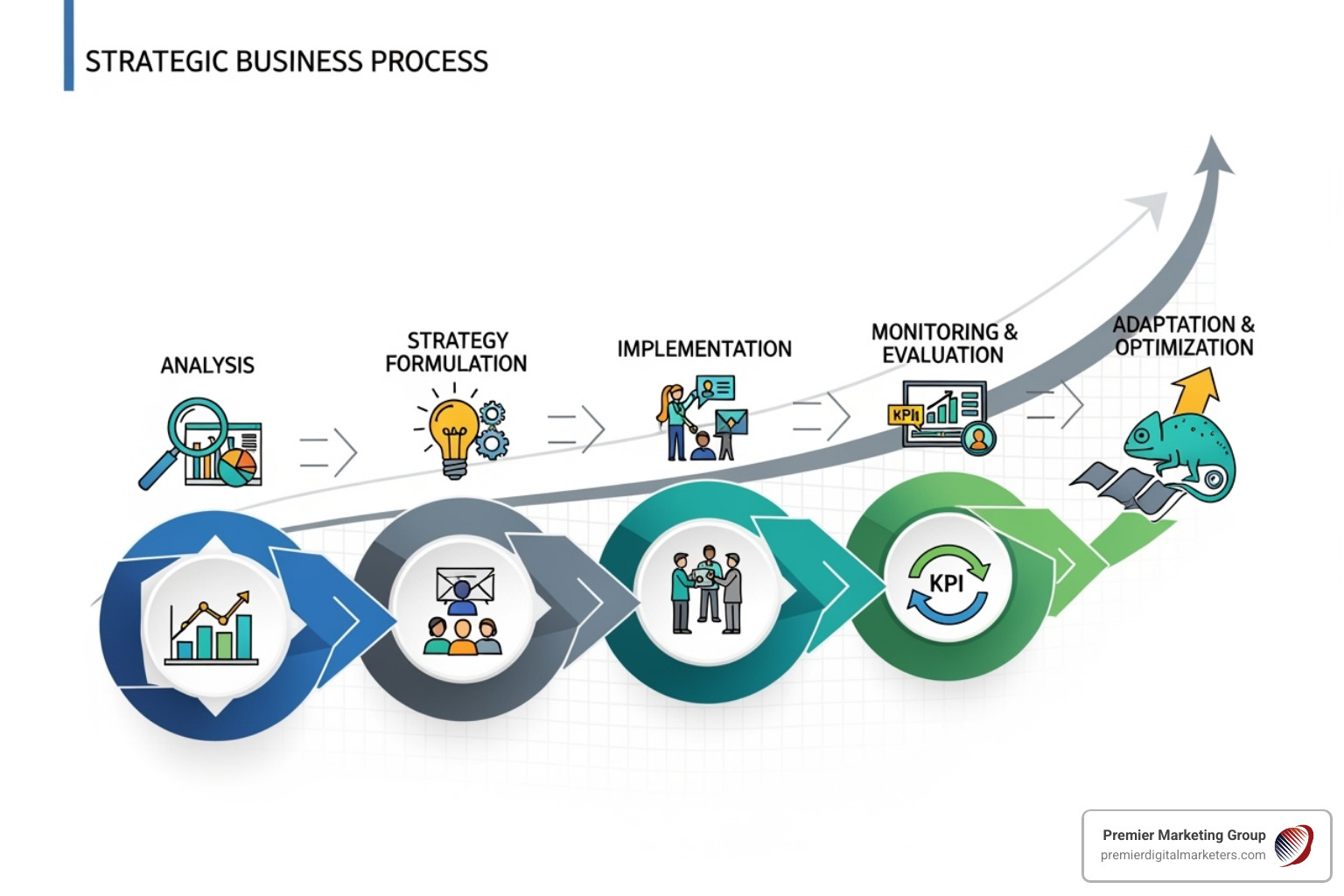
Before segmenting your customer base, you need to understand the bigger picture. Start with thorough market research to grasp industry trends, identify customer needs, and pinpoint pain points your products solve. Conduct competitive analysis to spot opportunities others might be missing.
Avoid vague goals like "increase sales." Instead, set SMART goals (Specific, Measurable, Achievable, Relevant, Time-bound), such as, "Increase Customer Lifetime Value by 15% for our VIP segment within 12 months." This ensures your segmentation efforts tie directly to tangible business outcomes. For deeper insights, see our guide on Market Research For Online Retail Business.
Online retailers have a huge advantage: a goldmine of customer information. Key data sources include:
Data quality is crucial. Use tools like CRM software and email marketing platforms to streamline collection and identify meaningful patterns. As research on online consumer segmentation confirms, comprehensive data is the key to effective segmentation and robust E Commerce Solutions.
Turn your data into actionable customer groups. Group customers with similar traits into distinct segments and create detailed customer personas to bring them to life. Prioritize segments based on their potential ROI. Focus on high-value segments that deliver exceptional returns:
With clear segments, you can craft marketing campaigns that speak directly to each group. Tailor messaging and offers to match each segment's needs. Personalize product recommendations on your site, in emails, and through ads based on past behavior.
Choose the right channels for each segment—Gen Z may prefer Instagram, while other demographics favor email. Use A/B testing to constantly optimize headlines, calls-to-action, and offers within each segment. This targeted approach is where our expertise in Google Ads For Retailers can play a crucial role.
Segmentation is not a one-time project; it's an ongoing process. Continuously track key performance indicators (KPIs) for each segment, including conversion rates, customer acquisition cost, and customer lifetime value (CLV).
Use analytics dashboards to measure performance and gather customer feedback to understand what's working. Customer preferences and market dynamics evolve, so your segments must evolve too. Regularly revisit and refine your approach to stay agile and effective.
Implementing market segmentation for online retailing has its challenges. However, with the right approach and an awareness of common pitfalls, you can steer these issues successfully and maximize the value of your strategy.

Understanding these common obstacles can save you time, money, and frustration:
These proven strategies consistently lead to successful segmentation:
This comprehensive approach is part of a broader strategy. For more insights, explore our guide on Online Marketing For Retailers.
Here are answers to some of the most common questions retailers have when starting their segmentation journey.
While often used interchangeably, these terms have a key distinction:
Both are essential for a complete market segmentation for online retailing strategy. A good approach is to start with customer segmentation, since you already have the data, and expand to market segmentation as you grow.
There is no magic number. The ideal quantity depends on your business size, resources, and the diversity of your customer base and product offerings. A store with a wide variety of products will likely need more segments than a niche store.
As a best practice, start with 3-5 core segments that represent your most valuable or distinct customer groups (e.g., VIPs, new buyers, at-risk customers). You can expand and refine from there as you build your capabilities. The goal is to be targeted without becoming unmanageable.
Excellent tools are available for every budget and business size. Here are the most valuable categories:
Start simple with a few key data sources and expand your toolkit as your market segmentation for online retailing strategy matures.
In the dynamic world of e-commerce, market segmentation for online retailing is the difference between thriving and merely surviving. This powerful strategy transforms scattered marketing into laser-focused campaigns that resonate with your customers.
The results are clear: personalized experiences that boost conversion rates, improved marketing ROI, and stronger customer loyalty that turns one-time buyers into lifelong advocates. When you understand who your customers are, what motivates them, and how they behave, you can create marketing that feels less like selling and more like helping.
However, market segmentation for online retailing is not a one-time task. It's a living process that must evolve with your business and your customers. The most successful retailers are those who stay curious, keep measuring, and continuously refine their approach.
Segmentation is the foundation of effective Digital Retail Marketing. Without it, you're marketing in the dark.
At Premier Digital Marketers, we specialize in crafting data-driven marketing solutions that convert traffic into loyal, repeat customers. We can help you turn customer insights into real results.
Ready to stop guessing and start growing? To build a powerful, personalized strategy for your online store, explore our comprehensive marketing services.