
Retail customer journey mapping is the process of creating a visual representation of every interaction a customer has with your brand, from first awareness to post-purchase advocacy. This strategic tool helps you understand how customers find, evaluate, and purchase your products across all touchpoints.
Key Components of Retail Customer Journey Mapping:
A customer might see your product on Instagram, research it on your website, visit your store, then buy online. This is just one path. Without mapping these journeys, you're flying blind.
The stakes are high: 88% of customers value their experience as much as the product, and over half will leave a brand after one bad interaction. Understanding the customer journey allows you to eliminate friction, create seamless experiences, and turn browsers into buyers.
Consider that 70% of online shoppers abandon their carts. Most of these lost sales occur because businesses don't understand customer friction points. Journey mapping shows you exactly where and why customers drop off.
I'm Rob Gundermann, and for over 15 years, I've helped businesses optimize their customer experience with strategic marketing and web design. Using retail customer journey mapping, I've helped clients identify roadblocks and create smoother paths to purchase, consistently improving customer retention and sales.
Easy Retail customer journey mapping word list:
A retail customer journey map is a visual story showing every interaction a customer has with your business, from seeing an ad to making a return. Think of it as a GPS for understanding the customer experience.
Journey mapping lets you see your business through your customer's eyes. It helps you spot frustrating dead ends, confusing detours, and missed opportunities that are costing you sales.
The numbers tell the story. When companies focus on boosting retention by just 5%, they can increase profits by 25-95%. That's the power of truly understanding your customer's experience and fixing the broken parts.
Business owners often forget what it's like to be a customer. Journey mapping forces you to step into their shoes and understand their experience and feelings.
The average cart-abandonment rate is 69.57%. Nearly seven out of ten shoppers who add items to their cart leave without buying. Journey mapping shows you exactly where they get stuck.
Is your checkout process too complex? Are there surprise shipping costs? Is your mobile site slow? Without a map, you're guessing. With one, you can optimize the user experience with real insights and boost conversion rates.
The emotional journey matters just as much as the practical steps. When you understand whether customers feel excited, confused, frustrated, or delighted at each touchpoint, you can design experiences that keep them moving forward instead of hitting the back button.
A major benefit of retail customer journey mapping is getting everyone on the same page. When marketing, sales, and customer service understand the same customer story, they start working together instead of in silos.
Your marketing alignment improves because campaigns target the right message at the right moment. Your sales alignment gets better because staff understand what customers need to hear. Your customer service alignment becomes proactive instead of reactive because you anticipate problems before they happen.
This shared understanding creates unified goals. Instead of separate departmental objectives, the entire team works toward targeted customer-engagement strategies that serve the customer.
Journey mapping isn't just about getting that first sale – it's about building relationships that last. When you understand the complete customer experience, you can provide proactive service and create personalized experiences that keep people coming back.
Over half of shoppers will leave a brand after one bad interaction. Conversely, loyal customers, while a smaller group, can generate over 40% of total revenue.
Journey mapping helps you identify those make-or-break moments where customers decide whether to stick around or move on. When you know where these moments happen, you can design experiences that turn first-time buyers into lifelong fans who tell their friends about you.
The goal isn't perfection – it's increasing customer lifetime value by understanding what matters most to your customers and delivering it consistently across every touchpoint.
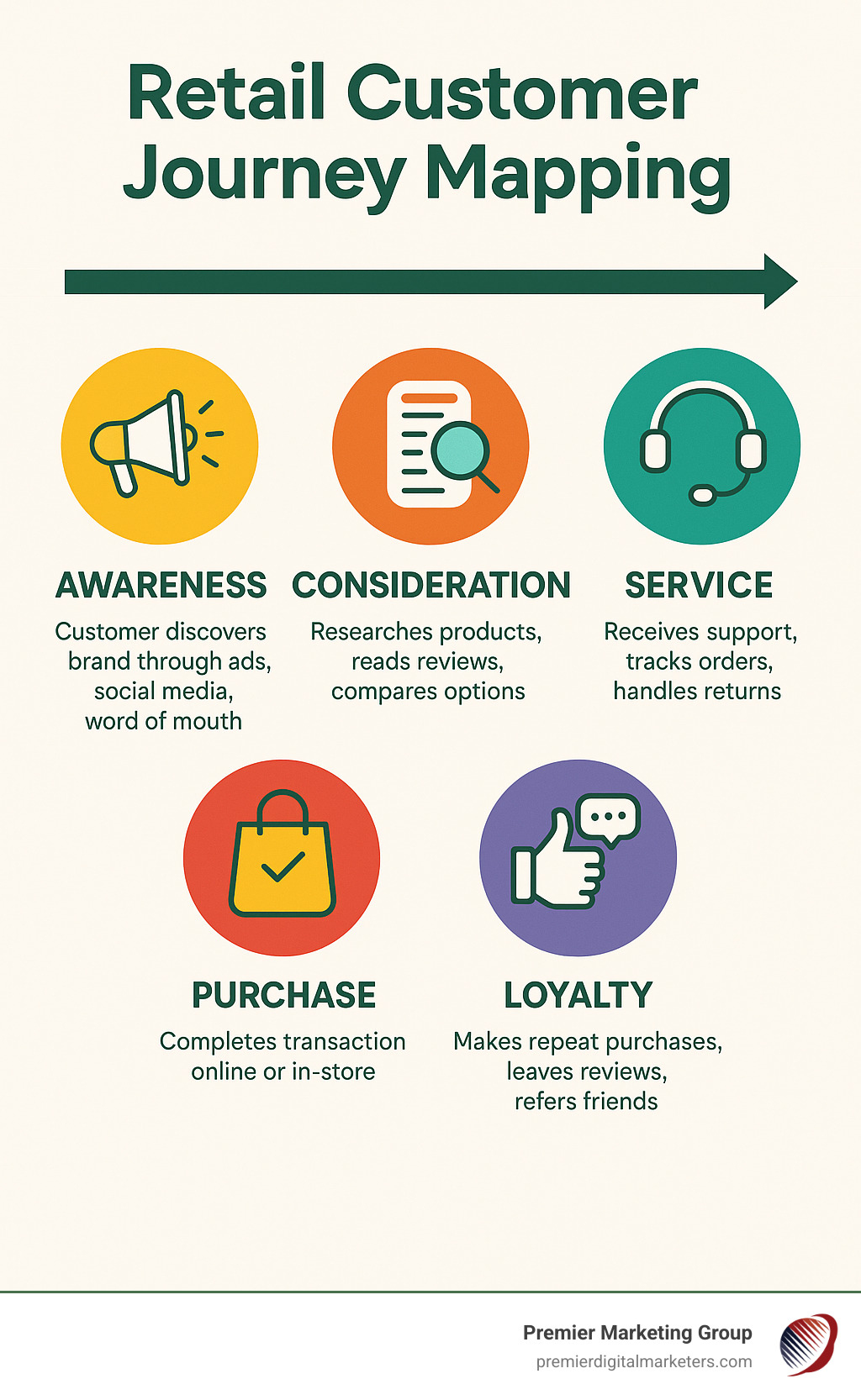
Modern retail customers don't follow a straight line to becoming a loyal fan. They take a non-linear path across multiple touchpoints, like seeing a product on social media, reading reviews, visiting a store, and finally buying on a mobile app with a discount code.
Understanding these complex paths is what separates successful retailers from those wondering where their customers went. Let's break down the five key stages of retail customer journey mapping.
Awareness is when a customer realizes they have a problem and finds your brand as a potential solution.
Search engines and social media are top channels for findy. Customers also find you through paid ads, organic social content, word of mouth, and influencer marketing.
For example, a customer might see your product in a friend's social media story and later see your ad. Each touchpoint builds awareness, nudging them toward consideration.
Once aware, customers become detectives. They dive into product pages, scour customer reviews, and compare you against other options.
Since fewer than 5% of U.S. consumers skip online reviews, nearly all potential customers are looking for social proof from other buyers.
Customers may also make in-store visits, ask friends for opinions, and consume content to understand their options. This is a prime time for targeted marketing that builds trust. Educational content, detailed product info, and testimonials deliver higher ROI than generic ads.
This is the actual transaction. Whether through your online checkout, in your physical store, or via mobile app, this stage must be as smooth as possible.
Customers expect multiple payment options, transparent pricing, and a simple checkout process. They want clear shipping information and no surprise fees.
Friction here can cause cart abandonment. After all their effort, don't let a clunky point-of-sale system be the reason they walk away.
Many businesses neglect the post-purchase experience, but it's crucial for building lasting relationships. This includes order tracking, customer support, customer onboarding, and handling returns and exchanges.
While 90% of customers want to check their order status, many businesses don't offer easy tracking. Proactive communication like shipping updates and follow-up support can turn a one-time buyer into a lifelong customer.
The final stage is where customers become repeat buyers who leave positive reviews, refer friends, join loyalty programs, and create user-generated content. They become unpaid salespeople for your brand.
At this stage, customers become brand advocates who share their positive experiences. Building community and encouraging customers to share their stories can turn them into your most powerful marketing force.
Word-of-mouth recommendations from real customers are far more trusted than any advertising you could buy.
Creating an effective retail customer journey mapping strategy isn't overwhelming if you follow a systematic approach. This framework turns customer insights into actionable improvements, helping you build a digital presence that converts.
Before mapping, define your objectives. Are you trying to reduce cart abandonment, improve customer service response times, or increase repeat purchases?
Clear goals will shape the mapping process. Use persona development tools to organize details about your ideal customer. Focus on one primary customer type to start. Trying to map multiple personas at once leads to confusion. Start with your most important customer group; you can create additional maps later.
Now, the detective work begins. You need both quantitative and qualitative data for a complete picture. Tracking customer behaviors across all channels is essential to understand how people interact with your brand.
Start with qualitative data like customer interviews and surveys to reveal the "why." Then add quantitative data from website analytics, sales reports, and social media insights. Don't forget customer service logs—they're goldmines for understanding pain points.
Customers interact with you everywhere: social media ads, your website, customer support chat, a physical store, your mobile app, and email newsletters. Each of these touchpoints is a crucial part of the journey and must be tracked.
Website analytics show where people drop off, while social media listening reveals what customers think. Even post-purchase follow-up emails are critical touchpoints.
To create a great journey map, document what customers do (customer actions), think (customer thoughts), and feel (customer emotions) at each stage.
Empathy is your superpower here. Put yourself in your customer's shoes. Are they excited, frustrated, or anxious at different points?
Moments of delight are as important as pain points. These positive experiences, like a handwritten thank-you note or a quick, helpful chat response, exceed expectations and create lasting positive memories.
Look for opportunities for improvement where small changes can have a big impact, like fixing one annoying checkout step to boost conversions.
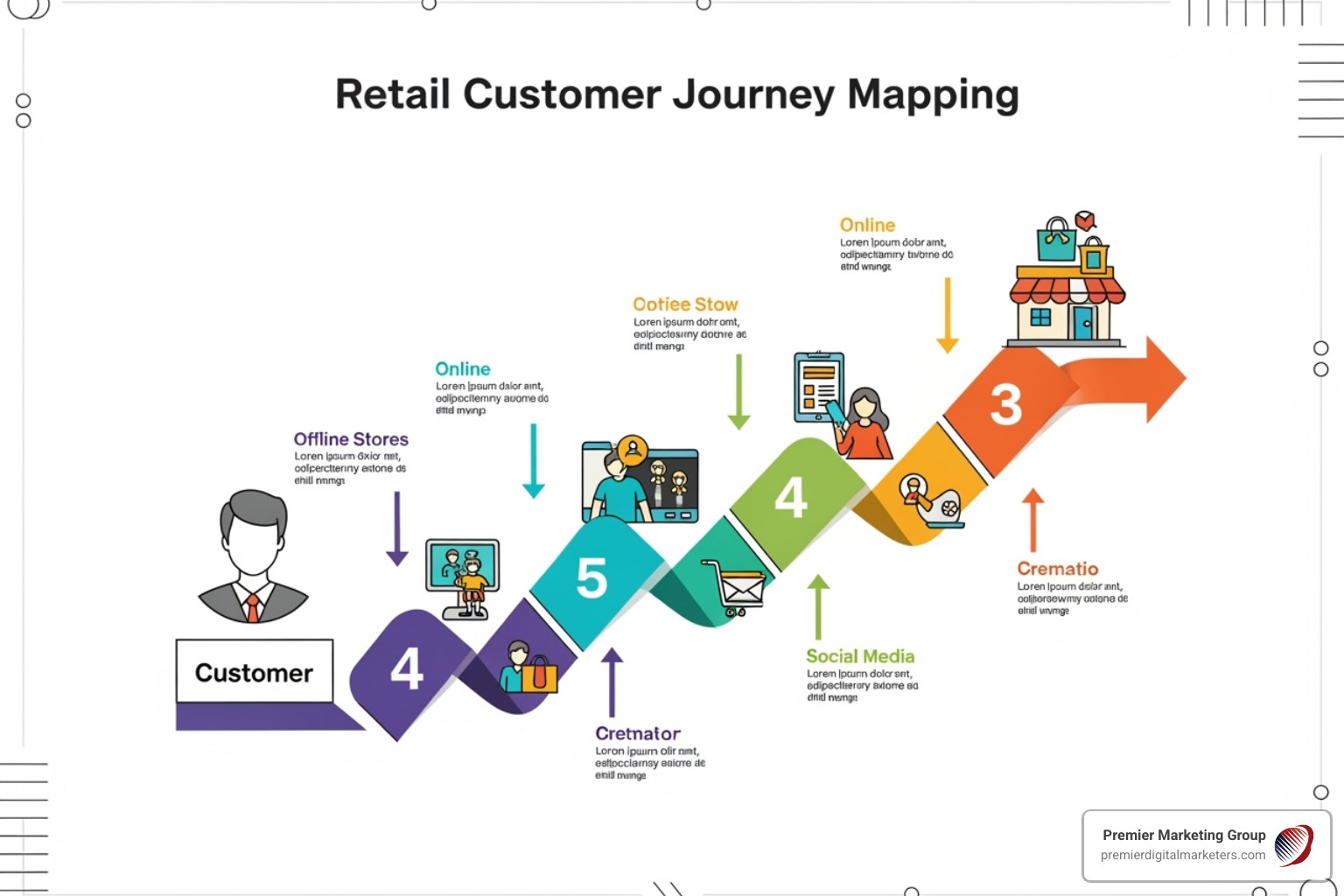
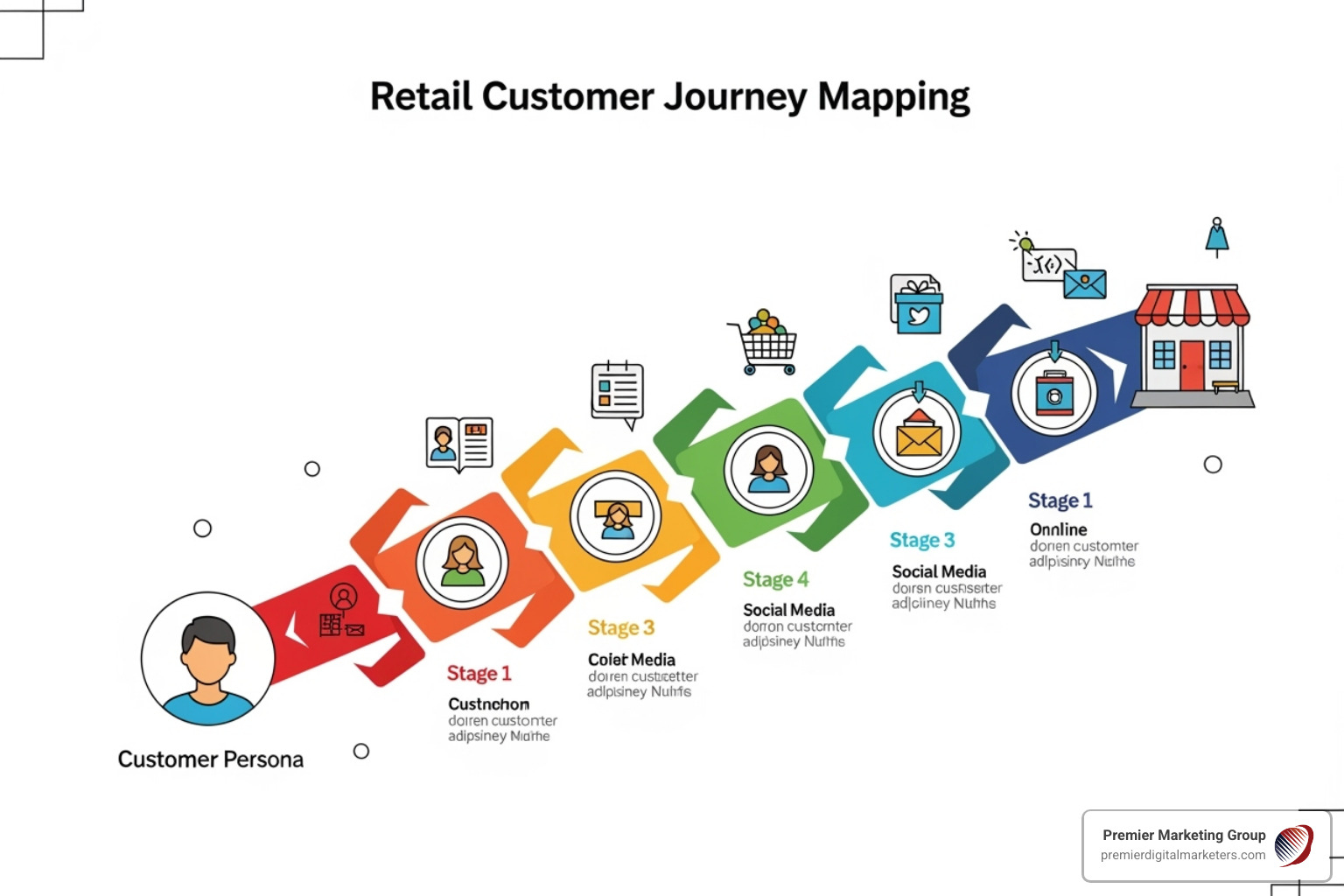
Visualize your journey map using infographics, diagrams, or spreadsheets. The format matters less than ensuring the story is clear and actionable.
Use funnel exploration reports from your analytics to find exact drop-off points. These are your biggest opportunities for quick wins.
Identify gaps between customer expectations and their actual experience. Then prioritize opportunities based on impact and effort. Fix easy wins first to build momentum.
Your journey map is a living document that evolves with your business. Implement changes based on your findings and use A/B testing to validate improvements with real data.
Monitor KPIs like conversion rates and customer satisfaction to measure the impact of your changes. If something isn't working, adjust and try again.
Finally, share the map across all departments for alignment. When marketing, customer service, and other teams are on the same page, they can create better campaigns and provide proactive support, dramatically improving the customer experience.
Remember to update the map regularly, at least quarterly or after any significant business changes. This keeps your customer understanding fresh and relevant.
Once you've created your retail customer journey mapping blueprint, it's time to put it to work. This means turning your understanding into actionable strategies that drive growth and deliver measurable ROI.
Your journey map is a treasure map showing where to find opportunities. The insights gathered become the foundation for strategic decisions that revolutionize how you connect with customers.
Your journey map reveals the perfect timing for every marketing message. Instead of generic ads, you can optimize your ad spend by targeting customers with the right message at the right stage.
This targeted approach transforms your email marketing campaigns into personalized conversations. Customers will appreciate hearing from you because each message is relevant and helpful.
You can also use journey data to create personalized product recommendations based on a customer's specific problems and journey stage.
Modern customers think in experiences, not channels. Your journey map helps you bridge online and offline gaps, ensuring customers never feel lost as they switch between channels.
Customers might research on their phone, compare on a laptop, visit your store, and buy online. These touchpoints must work together seamlessly.
Smart retailers use physical stores as fulfillment hubs for online orders, creating a seamless experience that leverages both digital and physical strengths.
Consistent branding across all touchpoints is crucial. Your social media, emails, website, and in-store experience should all feel like they come from the same brand, building trust and predictability.
Journey mapping makes customer service proactive, not reactive. You can anticipate customer needs at each stage and address issues before they become frustrations.
For example, if customers often ask about shipping, you can proactively send tracking updates. If they struggle with setup, you can send helpful onboarding content.
Chatbot solutions become more effective when designed around the customer journey, providing stage-specific help instead of generic FAQs.
Self-service options are more useful when based on real customer needs identified in your map.
The goal is reducing response times by understanding when customers need help most. Your journey map helps you decide between an automated response and human attention.
Understanding the natural customer flow allows you to design support experiences that feel effortless, turning customer service into a competitive advantage.
An effective retail customer journey map needs several key components. Start with a clear customer persona, which is the foundation of your map.
The timeline should show journey stages from awareness to advocacy, documenting customer actions, thoughts, and feelings at each step.
Include all touchpoints (website, social media, store, support) and identify pain points where customers get stuck or abandon their journey.
Crucially, your map must highlight opportunities for improvement to be more than just a pretty picture.
There are four main types of customer journey maps, each with a different purpose:
Your customer journey map is a living document, not a one-time project. It needs regular updates to stay useful.
Review your map quarterly or semi-annually to ensure it reflects reality, as customer behavior constantly shifts.
Always update your map after major business changes, like a new website or return policy, to ensure it reflects these adjustments.
Staying current with customer experiences is key. An outdated map leads to poor decisions based on old information, wasting time and money.
Retail customer journey mapping is more than a buzzword; it's a fundamental shift toward understanding your customers' experience. In today's crowded market, businesses that master journey mapping pull ahead of the competition.
When you understand every step, you can smooth out friction points and create moments that encourage customers to return. It's a roadmap to customer happiness.
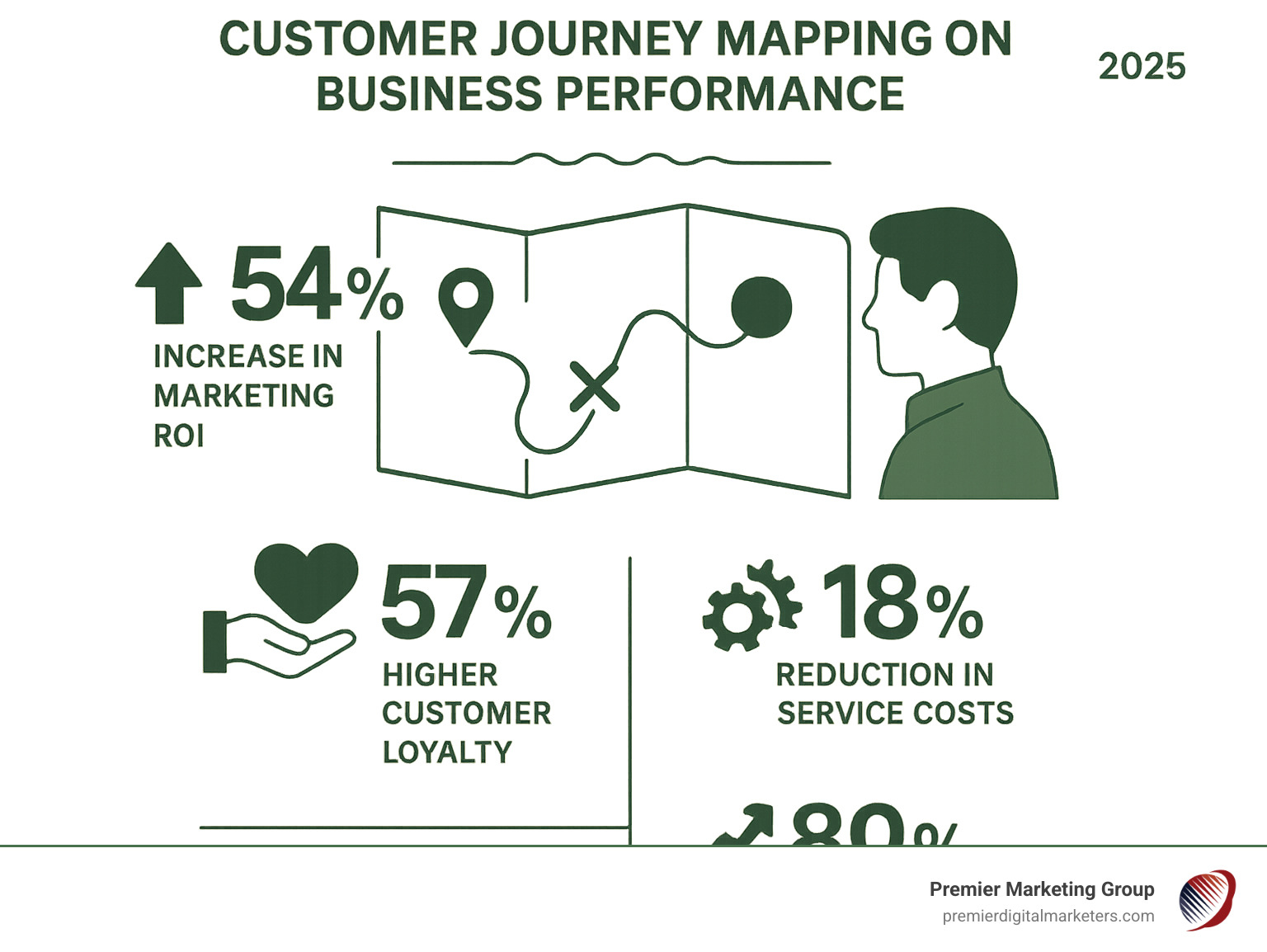
Companies that improve customer experience see real gains in retention and revenue. Knowing where customers get frustrated allows you to fix problems before they cost you sales.
This isn't a one-time project. As customer needs and technology change, you must stay committed to putting customers first, using real data—not gut feelings—to guide your decisions.
Customer expectations are always rising. Thriving businesses see this as an opportunity, using journey mapping to stay ahead of customer wants.
The process is about continuous improvement: map the journey, find problems, fix them, and repeat. Each adjustment improves the experience.
At Premier Digital Marketers, we implement data-driven strategies to improve online presence and create customer experiences that convert. Our personalized approach means we analyze every touchpoint in your customer journey to ensure it's working for your business.
Ready to understand what your customers are really going through and turn that knowledge into sales? Open up your marketing potential with our comprehensive approach to customer experience optimization. We'll help you see your business through your customers' eyes and make the changes that matter.