If you sell products online, you are competing for attention before a shopper ever reaches your store. The central question is simple: Should you invest in SEO, PPC, or both?
After more than 15 years helping small businesses and ecommerce brands grow, we have learned that SEO and PPC are not opposing teams. They are two parts of the same sales system. SEO builds your long-term visibility, while PPC helps you capture demand immediately.
Think of SEO as planting an orchard. It takes time to grow, but it can produce fruit season after season. PPC is more like renting a highly visible roadside sign: you can attract attention quickly, but the traffic stops when you stop paying.
| SEO | PPC |
|---|---|
| Builds compounding visibility | Produces immediate traffic |
| Supports long-term customer acquisition | Helps launch and test products quickly |
| No incremental cost for each organic click | Costs money for each click or conversion |
| Requires technical and content work | Requires ongoing budget and optimization |
| Best for evergreen products and categories | Best for promotions, new products, and remarketing |
For a new Pennsylvania store, PPC can help validate demand within days. However, SEO should begin at the same time. If you wait six months to build your organic foundation, you may spend far more on paid traffic than necessary.
Our field rule is simple: “Use PPC to discover what converts, then use SEO to own more of that demand.”
Your product pages are not digital shelves. They are your sales staff, product catalog, trust builder, and checkout assistant: all working at once.
Start with these improvements:
Google explains that product structured data can help products appear with richer information, including price, availability, ratings, shipping, and returns. Google also distinguishes between product snippets and merchant listings for pages where shoppers can purchase directly.
That means your ecommerce website should include accurate Product and Offer structured data, while your Google Merchant Center feed should match the same product names, prices, inventory, and identifiers.
Reviews are more than social proof. They answer the questions that stop shoppers from buying:
Baymard’s research found that 19% of shoppers abandon because they do not trust a site with their credit card information, while 13% cite an unsatisfactory return policy. Clear policies, secure checkout signals, and authentic reviews can directly address those concerns.
This is also where reputation management for businesses supports ecommerce growth. Your public reputation influences branded searches, repeat orders, and the confidence shoppers bring to your product pages.
PPC is especially valuable when you need results before SEO has had time to mature.
Prioritize paid campaigns when you are:
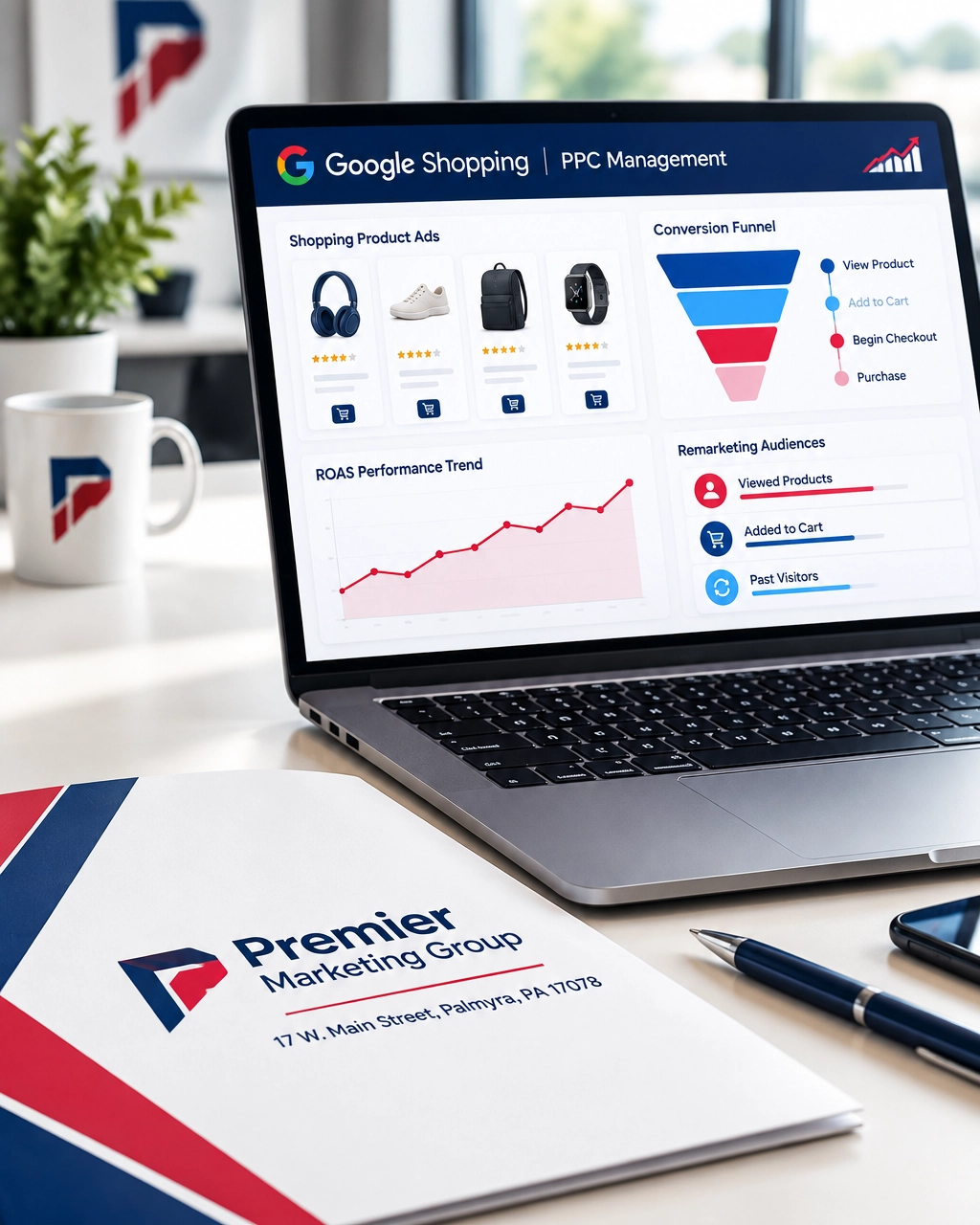
Google Shopping and Performance Max campaigns use product data to match your products with relevant searches. That makes feed quality extremely important. A vague title such as “Classic Jacket” gives Google less information than “Women’s Waterproof Quilted Jacket: Navy, Medium.”
Segment products by:
Your best-selling product is not always your most profitable product. A product with a $20 margin may deserve more budget than one with higher revenue but little contribution after fulfillment and advertising costs.
A qualified PPC management partner can help you manage bids, search terms, audiences, product groups, and return-on-ad-spend targets without treating every SKU the same.
You cannot make a reliable SEO-versus-PPC decision if your tracking is incomplete.
At a minimum, your ecommerce measurement system should record:
view_itemadd_to_cartbegin_checkoutadd_payment_infopurchaseTrack the product ID, product name, price, quantity, revenue, traffic source, and campaign. Use the same SKU or product identifier across your website, Merchant Center feed, GA4 events, and advertising platforms.
Then ask better questions:
Baymard’s current benchmark puts average online shopping cart abandonment at 70.22%. Its research also found that 40% of shoppers abandon because extra costs are too high, 20% because delivery is too slow, and 17% because the checkout process is too long or complicated.
Those numbers are not just industry trivia. They are a diagnostic checklist. Display total costs earlier, communicate delivery expectations clearly, offer guest checkout, and reduce unnecessary form fields.
Most shoppers do not buy the first time they visit. Some are comparing prices. Others are waiting for payday, checking reviews, or discussing the purchase with someone else.
Remarketing gives you a second conversation.
Build audiences for:
Keep the message relevant. A shopper who viewed a pair of boots should see those boots or related accessories: not a random sitewide advertisement.
Email and SMS can extend this strategy through marketing automation. For example:
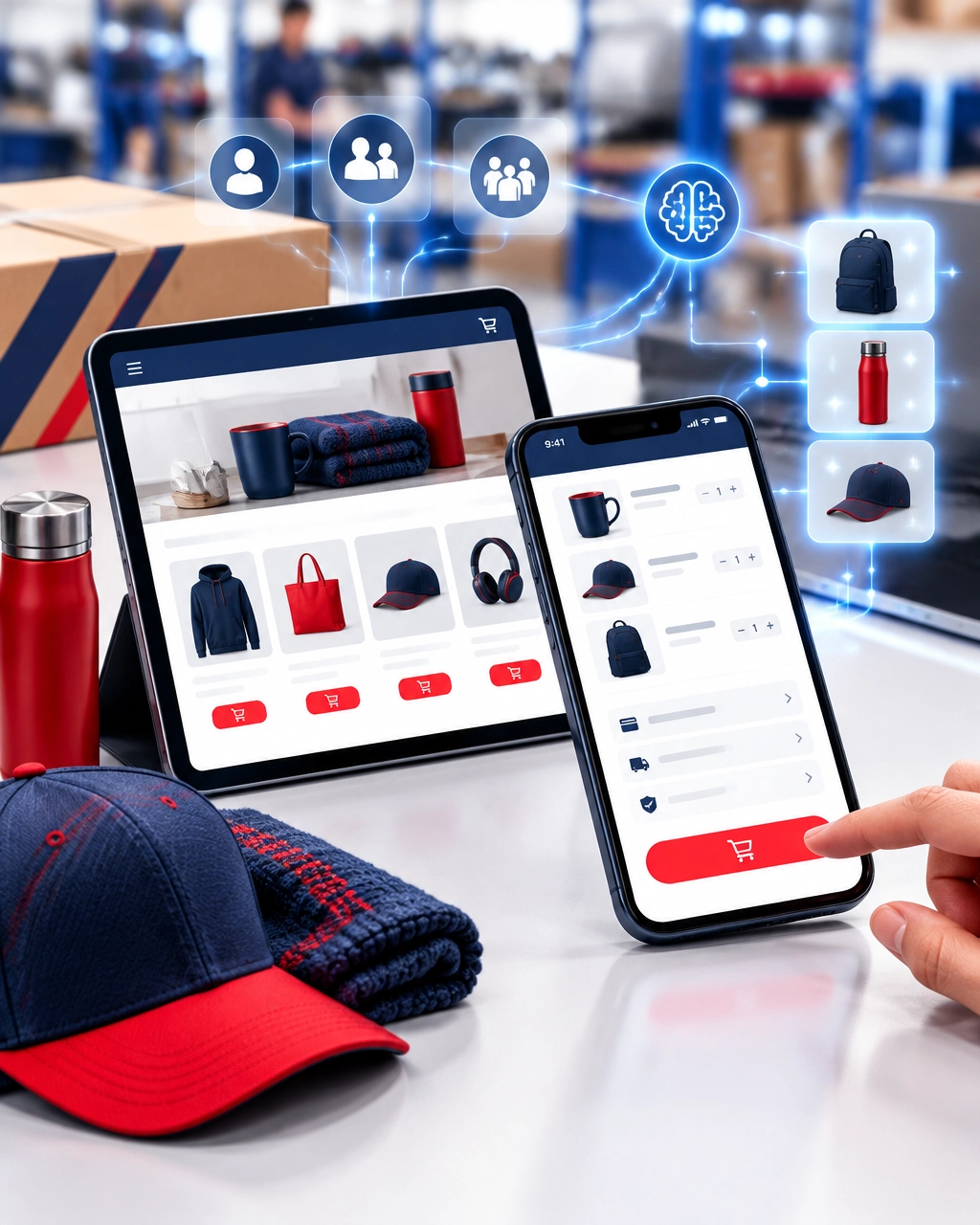
AI marketing is becoming useful when it supports better decisions: not when it replaces your brand voice.
You can use AI-assisted merchandising to:
Human review remains essential. AI can help you process information faster, but your team should approve claims, pricing, product details, and brand language.
The same principle applies to GEO, or generative engine optimization. Clear product information, accurate business details, helpful buying advice, and consistent brand signals can make your ecommerce business easier for search engines and AI tools to understand.
There is no universal percentage that works for every store. Your budget should reflect your growth stage, margins, competition, and cash flow.
A practical starting framework is:
Your website also matters. An experienced ecommerce development company can build the technical foundation for fast pages, clean product architecture, secure checkout, structured data, and scalable integrations.
If your store needs a broader redesign, explore our web design services. A strong storefront should make it easy for both search engines and shoppers to understand what you sell.
Neither is always better. PPC is faster and useful for immediate sales, testing, and promotions. SEO generally provides more durable value over time. Most ecommerce brands benefit from using both.
Many stores begin seeing meaningful improvements within three to six months, although highly competitive categories may take longer. Technical fixes and better product pages can produce earlier gains, especially when the site has serious indexing or usability problems.
No. Allocate budget according to profit margin, inventory, conversion rate, customer value, and strategic importance. Separate proven products from experiments so one group does not hide the performance of another.
Yes. Local visibility can strengthen trust and help you reach nearby shoppers, pickup customers, and regional audiences. A Lancaster-area brand, for example, may benefit from showing its Pennsylvania roots while still selling nationwide. Local SEO services can support that regional credibility.
Bring in a marketing consultant when your traffic is growing but sales are not, your advertising data is unclear, or you are unsure how to prioritize SEO, PPC, design, and automation.
You may benefit from one if your ecommerce growth depends on multiple connected services, including SEO services, paid advertising, web design services, branding, email automation, and analytics. A coordinated strategy is usually more efficient than asking several disconnected vendors to manage separate pieces.
If you are comparing providers, you may also search for a branding agency near me or a digital marketing agency that understands both creative positioning and measurable acquisition. The important question is not simply proximity: it is whether the partner can connect your brand, website, advertising, and customer experience.
SEO builds your store’s long-term equity. PPC creates momentum when you need it. Conversion tracking tells you where the money is going. Remarketing and automation help you recover opportunities that would otherwise disappear.
Premier Marketing Group has helped small businesses for more than 15 years with practical, cost-conscious growth strategies. From ecommerce development and SEO services to PPC, AI marketing, GEO, branding, and conversion-focused design, our goal is to help you take the next level with measurable progress.
Contact Premier Marketing Group to discuss your ecommerce growth plan and build a system that turns more searches into profitable sales.
Meta description: Compare SEO vs. PPC for ecommerce, improve product pages, track conversions, use Shopping ads to grow Pennsylvania sales with an ecommerce development company.
{"@graph":[{"@type":"Article","about":["Ecommerce SEO","PPC advertising","Google Shopping","Conversion tracking","Remarketing","Marketing automation"],"image":"https://cdn.marblism.com/dg7L5QeZt_Y.webp","author":{"url":"https://premierdigitalmarketers.com/","name":"Premier Marketing Group","@type":"Organization"},"headline":"SEO vs. PPC for Ecommerce: How Pennsylvania Brands Can Turn More Searches Into Sales","publisher":{"url":"https://premierdigitalmarketers.com/","logo":{"url":"https://premierdigitalmarketers.com/wp-content/uploads/2020/11/Premier-Marketing-Group.svg","@type":"ImageObject"},"name":"Premier Marketing Group","@type":"Organization"},"description":"Compare SEO and PPC for ecommerce, improve product pages, track conversions, and use Shopping campaigns, remarketing, and automation to grow Pennsylvania sales.","dateModified":"2026-09-14","datePublished":"2026-09-14"},{"@type":"FAQPage","mainEntity":[{"name":"Is SEO or PPC better for ecommerce?","@type":"Question","acceptedAnswer":{"text":"PPC is faster and useful for immediate sales, testing, and promotions. SEO generally provides more durable value over time. Most ecommerce brands benefit from using both.","@type":"Answer"}},{"name":"How long does ecommerce SEO take?","@type":"Question","acceptedAnswer":{"text":"Many stores begin seeing meaningful improvements within three to six months, although highly competitive categories may take longer.","@type":"Answer"}},{"name":"Should every product receive the same PPC budget?","@type":"Question","acceptedAnswer":{"text":"No. Allocate budget according to profit margin, inventory, conversion rate, customer value, and strategic importance.","@type":"Answer"}},{"name":"Do local SEO services help an online store that ships nationwide?","@type":"Question","acceptedAnswer":{"text":"Yes. Local visibility can strengthen trust and help you reach nearby shoppers, pickup customers, and regional audiences while still supporting nationwide sales.","@type":"Answer"}},{"name":"When should I hire a marketing consultant?","@type":"Question","acceptedAnswer":{"text":"Consider a marketing consultant when traffic is growing but sales are not, advertising data is unclear, or you are unsure how to prioritize SEO, PPC, design, and automation.","@type":"Answer"}}]}],"@context":"https://schema.org"}