A new lead is not a customer yet. It is an open door, and the way you respond after that door opens can determine whether the prospect becomes a loyal customer or chooses a competitor.
For a Harrisburg-area HVAC company, dentist, lawyer, accountant, ecommerce brand, or other service business, the complete follow-up funnel now matters as much as lead generation itself. Marketing automation and AI agents can help you respond, qualify, book, nurture, and reactivate leads without forcing your team to manage every step manually.
I’m Rob Gundermann, and I have spent more than 15 years helping small businesses improve their marketing, websites, visibility, and customer acquisition systems. At Premier Marketing Group, our mission is to turn marketing activity into measurable business growth.
Many businesses invest heavily in SEO, paid advertising, social media, and professional web design. But the lead can still be lost after submitting a form or calling your office.
Why? The follow-up process is often manual:
That process creates a leaky bucket. You can pour more visitors into the top, but the bottom continues losing opportunities.
A 2026 study of 28,400 leads across 184 accounts found that leads contacted within five minutes qualified at roughly 21 times the rate of leads contacted after more than 24 hours. Only 27.2% of leads in the study received a response within one hour, while the median response time was 1 hour and 42 minutes. Read the full 2026 lead response time study.
These are not guarantees for every industry, but they reveal an important pattern: delay creates friction, and friction creates missed opportunities.
AI agents and marketing automation work best together, but they are not the same thing.
Marketing automation is the system of triggers, rules, messages, reminders, and handoffs that moves a lead through your funnel.
For example:
An AI agent can interpret what a prospect is saying and respond within approved guidelines. It can ask follow-up questions, summarize a conversation, identify intent, and recommend the next step.
Think of marketing automation as the road system and the AI agent as a capable guide. The roads create the route. The guide helps each traveler move in the right direction.
A strong system combines both:
The first step is speed-to-lead.
An AI agent can acknowledge a website inquiry, text message, or missed call within seconds. That first response does not need to solve the entire problem. It needs to confirm that the inquiry was received and provide a clear next step.
A useful first message might:
This creates a digital handshake. The prospect knows your business is available and organized.
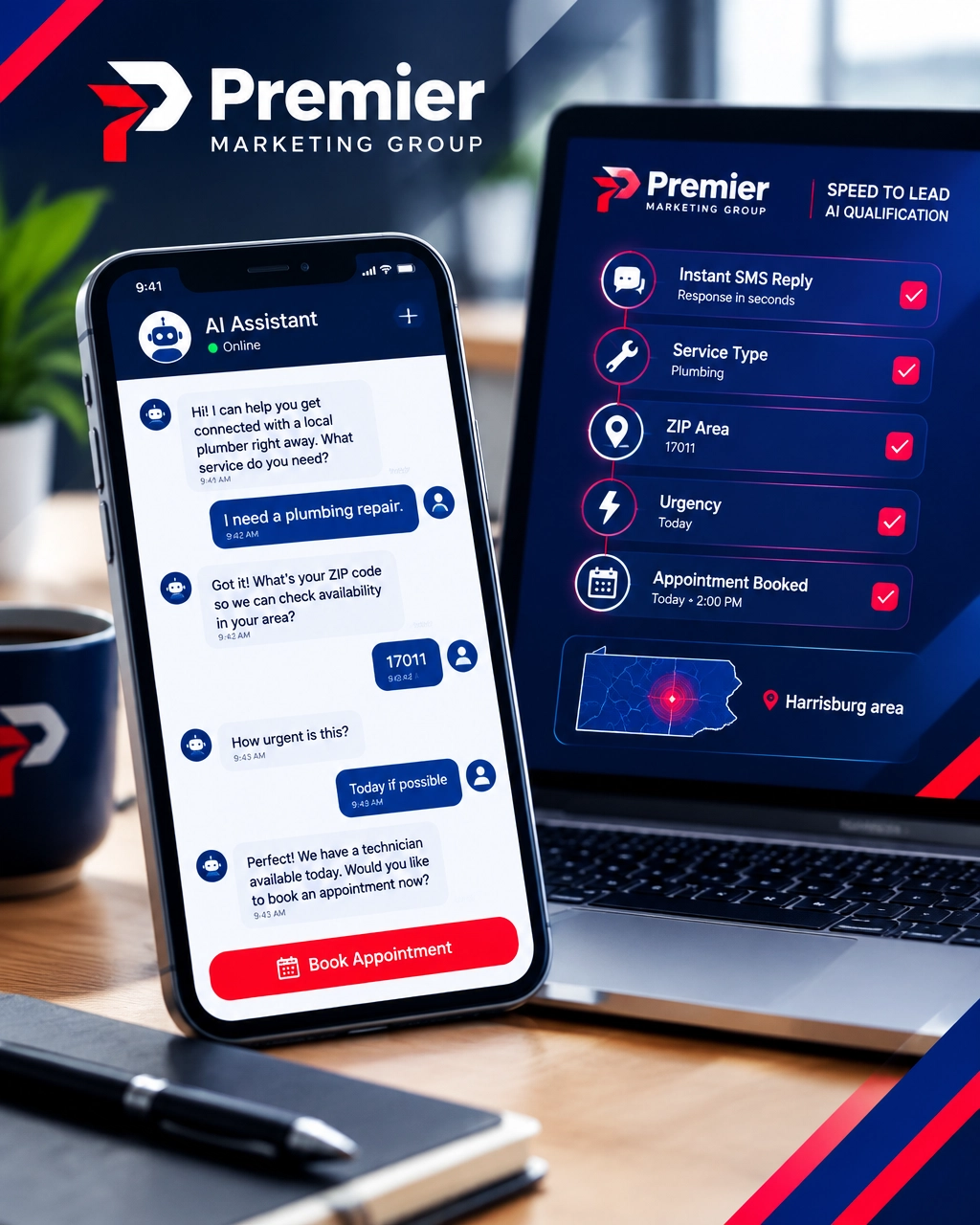
Start by automating:
Do not confuse an instant automated message with complete follow-up. A generic “Thanks, we’ll be in touch” message is helpful, but it should lead into the next stage: qualification.
Not every lead needs the same response.
A homeowner with a burst pipe requires a different workflow than someone researching routine plumbing maintenance. A dental patient asking about availability needs a different path than someone asking about financing. An ecommerce shopper comparing products may need product education before a purchase offer.
An AI agent can ask approved questions such as:
The goal is not to interrogate the prospect. The goal is to collect enough context for the next conversation to be useful.
You can route leads into simple categories:
This protects your team from spending equal time on every inquiry. High-intent leads receive immediate attention, while lower-intent prospects continue through a helpful nurture sequence.
Once a lead is qualified, the next step should be easy to understand.
A common problem is unnecessary scheduling back-and-forth:
Marketing automation can reduce this friction by connecting qualified leads to:
For a professional service practice in the Hershey area, this could mean guiding a new inquiry toward the correct consultation type. For a home service company, it could mean separating emergency requests from routine estimates.
Booking is not the end of the funnel. A scheduled appointment that does not happen creates another missed opportunity.
Use automation to send:
Research summarized in a 2026 guide to AI sales funnel automation emphasizes that booking and reminder workflows are among the most valuable uses of AI-assisted automation.
Many prospects do not say “no.” They say:
Without a nurture system, these leads disappear.
A nurture workflow keeps the conversation useful without becoming annoying. You can send:
The best nurture campaigns respond to behavior. If someone returns to a pricing page, downloads a guide, or clicks a service email, the system can increase their priority or notify your team.
A fixed drip campaign talks at people. Behavioral automation responds to what they actually do.
Your SEO services and PPC advertising may attract the visitor, but nurture automation helps keep the relationship moving.
One of the most overlooked revenue sources is the audience you already paid to acquire.
Look for:
Create separate reactivation campaigns for each group. A missed-call message should not sound like a holiday promotion. An old estimate may need a project update. A past customer may need a seasonal reminder.
AI can help summarize past conversations and recommend which message is most appropriate. Marketing automation can then deliver that message at the right time and track the result.
Reported local-business benchmarks indicate that missed-call and web-inquiry recovery campaigns can produce a 27% increase in booked appointments within 90 days, although your actual result will depend on lead volume, offer, industry, and execution.
Automation cannot rescue a confusing customer journey.
Your digital foundation should include:
Your custom website design should make it obvious what visitors should do next. Your local SEO strategy should help qualified prospects find you. Your reputation marketing should reinforce trust after they compare your business with competitors.
The website is the front door. Marketing automation is the staff member who makes sure visitors are welcomed, helped, and invited to return.
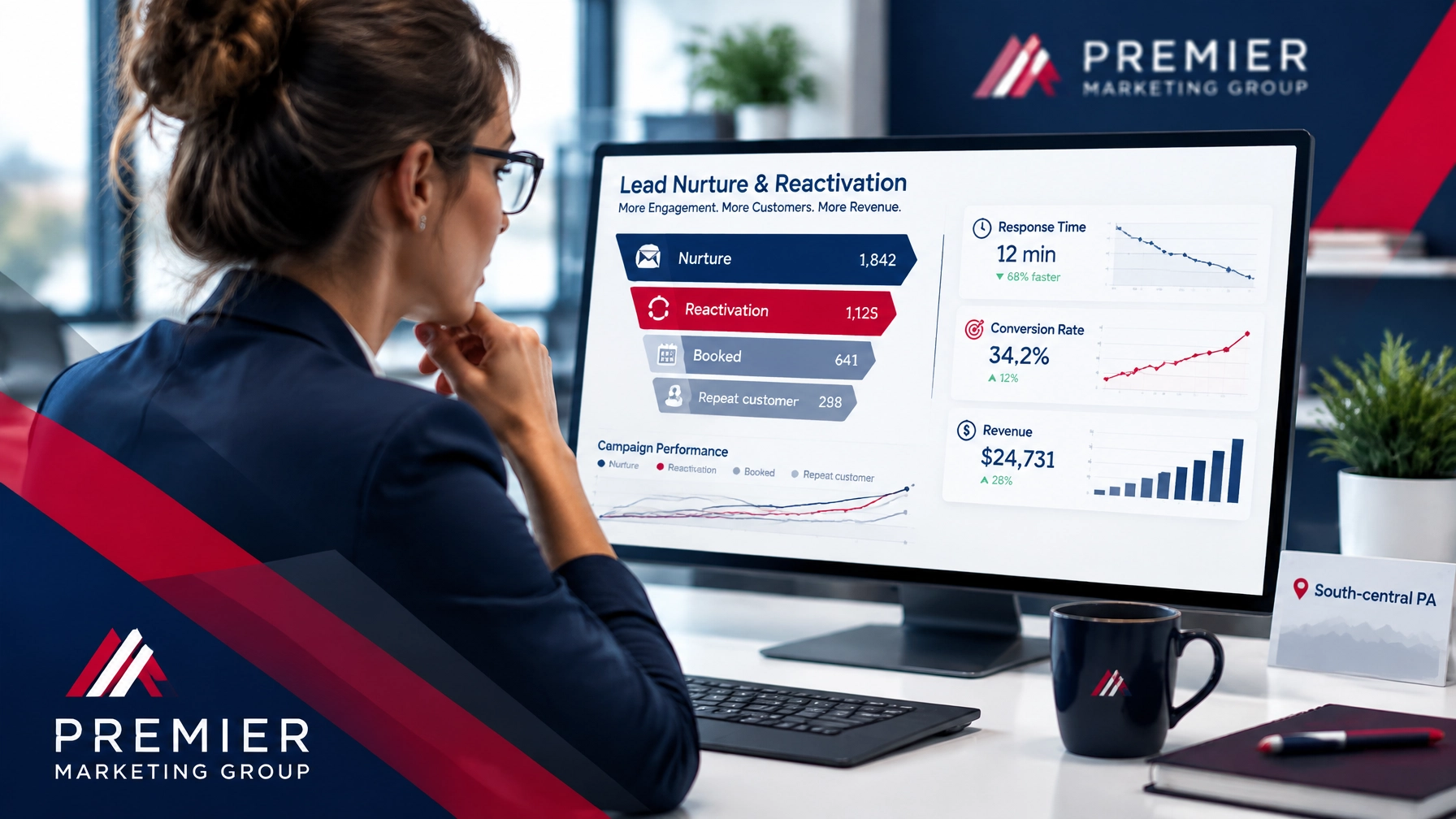
Do not judge automation by the number of messages sent. Judge it by the business results created.
Track:
For example, if you receive 100 leads and currently close 15, improving the close rate to 18 produces a 20% increase in customers without generating another lead.
That is why improving follow-up can be more cost-effective than immediately increasing your advertising budget.
You do not need to automate your entire business in one week.
Review the previous 30 days and identify whether you lose more opportunities through slow responses, missed calls, weak qualification, no-shows, or forgotten follow-up.
Begin with one measurable use case, such as:
AI agents should never invent prices, promise unavailable appointment times, provide legal or medical advice, or make claims your business cannot support.
Make it easy for a prospect to reach a person. Your AI agent should support your team, not trap customers in an endless loop.
Study conversations, incorrect classifications, abandoned bookings, and unanswered questions. Marketing automation is a system that improves through testing, not a “set it and forget it” shortcut.
No. Small businesses often benefit quickly because owners and employees cannot monitor every call, form, and message. A focused workflow can improve responsiveness without requiring a large internal team.
A basic chatbot usually responds to a limited set of scripted questions. An AI agent can interpret context, ask follow-up questions, summarize information, route leads, and trigger actions within an approved workflow.
Aim for an automated acknowledgment within seconds and a human response within five minutes whenever possible. The 2026 lead-response study cited earlier found a significant qualification advantage for leads contacted within that window.
Yes, but you should obtain appropriate permission, respect communication preferences, and follow applicable privacy and messaging requirements. Use text for timely, useful communication, not excessive promotional messages.
Cost depends on your lead volume, number of channels, CRM, calendar tools, AI complexity, and management needs. Start by estimating the value of missed calls, unbooked appointments, and dormant leads. That gives you a more useful investment benchmark than comparing software prices alone.
In 2026, the competitive advantage is not simply generating more leads. It is building a better path from first inquiry to qualified conversation, booked appointment, completed sale, repeat business, and loyal customer.
AI agents can provide speed and context. Marketing automation can provide consistency. Your team provides the expertise and personal trust that customers still value most.
Premier Marketing Group has helped businesses build practical, measurable marketing systems for more than 15 years. If leads are slipping through slow responses, weak qualification, or inconsistent follow-up, schedule a free discovery and strategy call.
Take your business to the next level by improving the opportunities you are already earning: one faster response, one better conversation, and one stronger customer relationship at a time.
Meta description: Marketing automation and AI agents help local businesses respond faster, qualify leads, book more jobs, nurture prospects, and win loyal customers in 2026.
{"@type":"FAQPage","@context":"https://schema.org","mainEntity":[{"name":"Is marketing automation only for large businesses?","@type":"Question","acceptedAnswer":{"text":"No. Small businesses often benefit quickly because owners and employees cannot monitor every call, form, and message. A focused workflow can improve responsiveness without requiring a large internal team.","@type":"Answer"}},{"name":"What is the difference between an AI agent and a chatbot?","@type":"Question","acceptedAnswer":{"text":"A basic chatbot usually responds to a limited set of scripted questions. An AI agent can interpret context, ask follow-up questions, summarize information, route leads, and trigger actions within an approved workflow.","@type":"Answer"}},{"name":"How quickly should a business respond to a new lead?","@type":"Question","acceptedAnswer":{"text":"Aim for an automated acknowledgment within seconds and a human response within five minutes whenever possible. Research cited in this article found a significant qualification advantage for leads contacted within that window.","@type":"Answer"}},{"name":"Can automation follow up by text message?","@type":"Question","acceptedAnswer":{"text":"Yes, but businesses should obtain appropriate permission, respect communication preferences, and follow applicable privacy and messaging requirements. Text should be used for timely, useful communication.","@type":"Answer"}},{"name":"How much does marketing automation cost?","@type":"Question","acceptedAnswer":{"text":"Cost depends on lead volume, channels, CRM, calendar tools, AI complexity, and management needs. Businesses should estimate the value of missed calls, unbooked appointments, and dormant leads before setting an automation budget.","@type":"Answer"}}]}