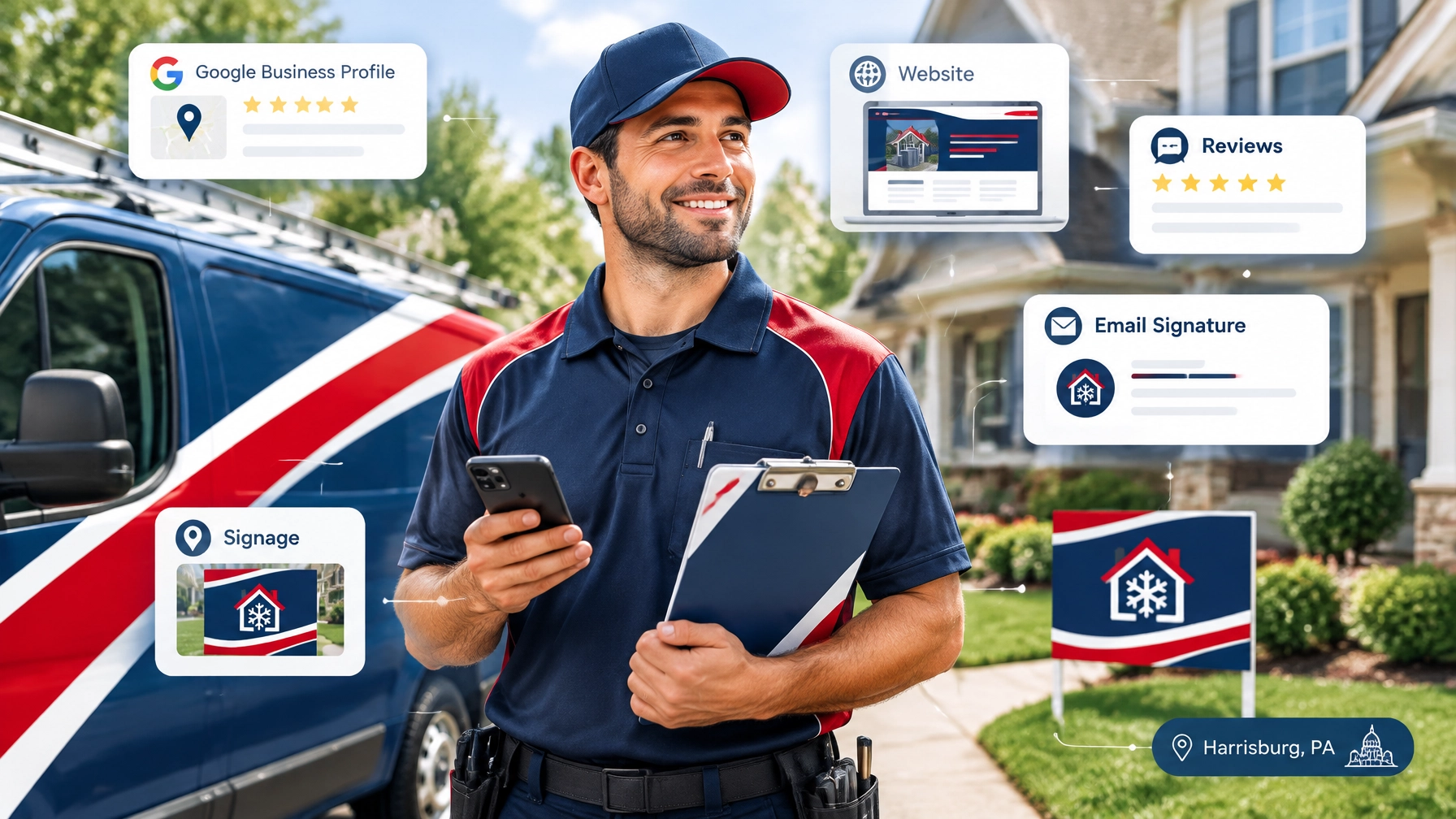
A homeowner asks ChatGPT for the best HVAC company near Hershey. A patient asks Gemini to recommend a dentist accepting new patients. A shopper uses Google AI Mode to compare products. Which businesses get named, and which ones are skipped?
The answer is not a secret AI hack. It is the combined strength of your business information, content, reputation, and technical accessibility. These signals help ChatGPT, Google AI Overviews and AI Mode, Gemini, Perplexity, and Copilot understand whether your business is relevant, trustworthy, and easy to recommend.
Premier Marketing Group has helped small businesses improve visibility and generate measurable growth for more than 10 years. This checklist is designed for home-service companies, professional practices, and ecommerce brands that want a practical way to improve their GEO foundation without chasing guaranteed placements.
AI assistants do not view your business the way a human customer does. They assemble an answer from available evidence.
That evidence may include your website, Google Business Profile, review platforms, directories, local news, professional associations, and other public sources. If those sources disagree about your hours, services, location, or contact details, the AI system has less confidence.
BrightLocal’s 2026 research reported that 45% of consumers use AI tools for local-business recommendations, up from 6% in 2025. The research also found that 88% of consumers fact-check reviews cited by AI.
A separate BrightLocal study of localized searches found that individual business websites represented approximately 42% of all citations, while Google Business Profile represented about 28.5%. That means your website and profile are not separate projects. They are members of the same digital family.
“The goal is not simply to be seen. The goal is to make it easy for the right customer to trust you and take the next step.”- Rob Gundermann, Marketing Consultant
Use the same real-world business name, address, phone number, website, hours, service area, and primary services across:
Inconsistent information creates uncertainty. A plumber listed with two different phone numbers or a dentist showing outdated hours may be overlooked when an assistant compares local options.
Score: 0 if information is inconsistent, 1 if most information matches, or 2 if all major sources are accurate and current.
Your Google Business Profile is one of the most important public records about your company. Confirm that it includes:
Google’s documentation says businesses should keep their information accurate and up to date for search features, including AI experiences.
Create a strong page for each important service and legitimate service area. A page for “Emergency Furnace Repair” should explain what you do, who you serve, what customers can expect, and how to contact you.
Do not create dozens of near-identical pages by swapping city names. Instead:
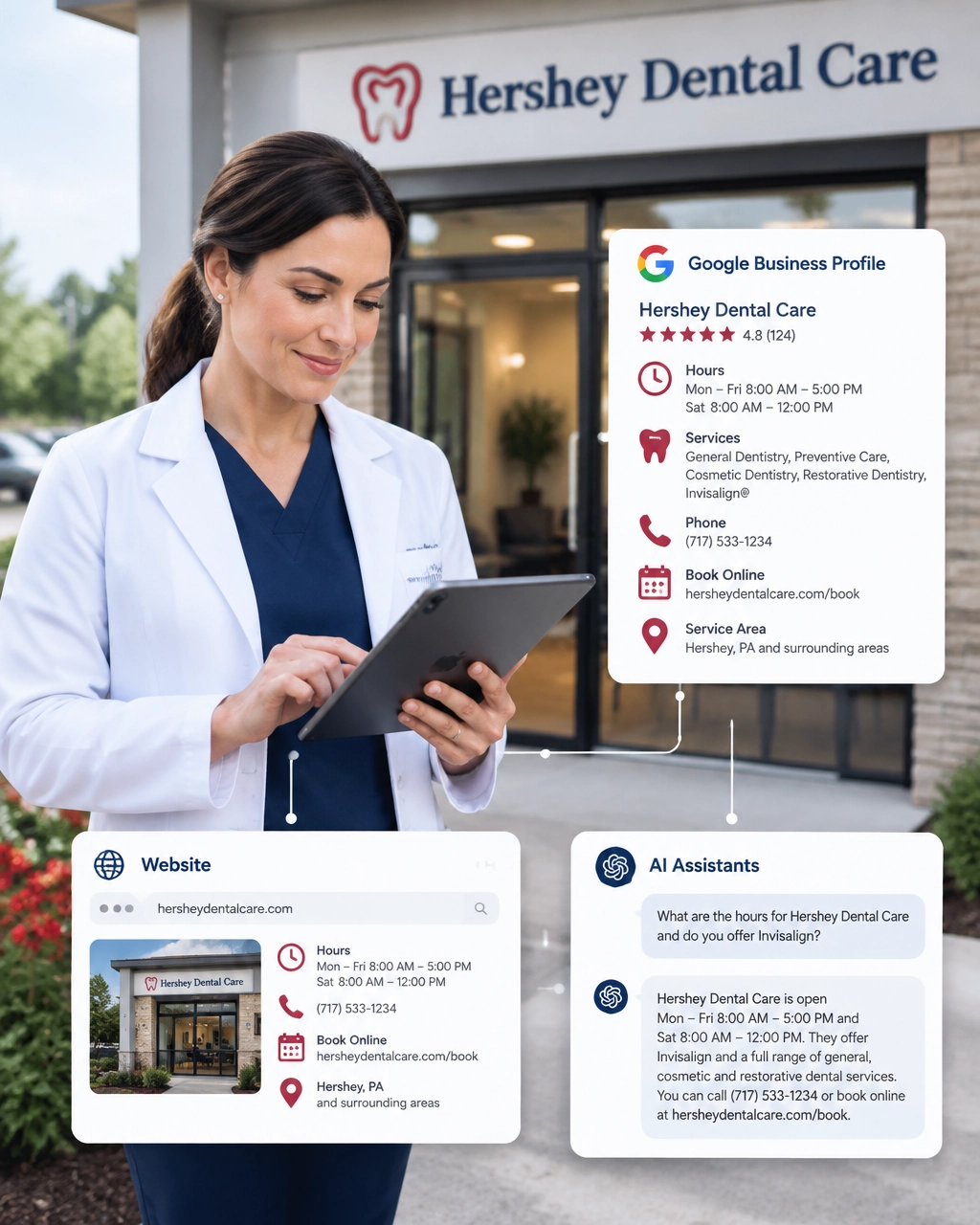
AI assistants are designed to answer natural-language questions. Your content should address questions such as:
Put the direct answer near the top of the page. Then add supporting details, qualifications, pricing factors, examples, and a clear next step.
Do not bury the answer under generic introductions. A clear, factual paragraph is easier for people and machines to understand.
AI systems, and the people using them, need reasons to trust your claims. Add evidence such as:
For example, a Lancaster-based roofing contractor can explain inspection steps, common roof problems, materials offered, and how storm damage estimates work. Specific details are more useful than broad claims like “We are the best.”
Use descriptive H2 and H3 headings, short paragraphs, bullet lists, tables, and concise definitions. Important business facts should appear as readable text, not only inside images, PDFs, or videos.
Add relevant internal links to your SEO services, custom website design services, and service pages so visitors and search systems can follow the full customer journey.
Reviews are not a one-time campaign. Ask satisfied customers for feedback consistently after a completed job, appointment, delivery, or purchase.
Encourage customers to describe their real experience, including:
Do not script reviews, buy testimonials, or offer incentives for positive sentiment. Authenticity matters more than manufactured volume.
A review response shows future customers how your business behaves when people are watching.
Respond by:
A thoughtful response can add context to your reputation without pretending every customer experience is perfect. Explore reputation management for businesses for a more organized process.
Do not look only at your Google star rating. Track:
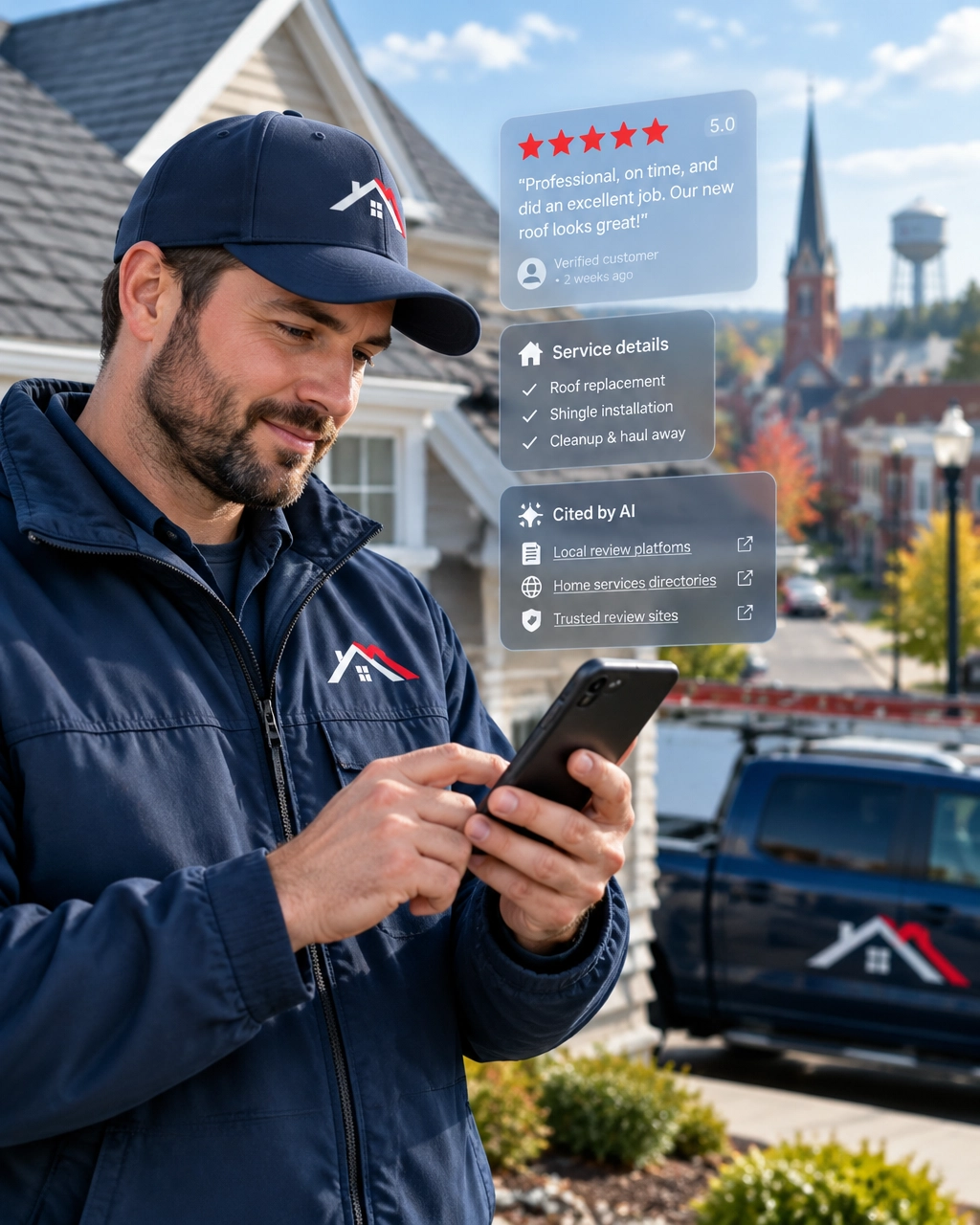
BrightLocal’s research indicates that consumers increasingly use AI tools for local recommendations, but many verify what the assistant says. Your public reputation must hold up when a prospect checks the source.
Google states that a page generally must be indexed and eligible for a normal search result to be eligible as a supporting link in AI Overviews or AI Mode. Google also says there is no special AI file or required AI schema type.
Check for:
noindex tagsrobots.txtTechnical requirements are not obstacles. They are opportunities to make your content available to more customers.
Add appropriate structured data when it matches visible page content. Depending on your business, this may include:
Never use structured data to claim information that customers cannot see. Validate your markup and update it when your business details change.
An AI recommendation is only valuable if the customer can act on it. Make sure your website provides:
Test every form, phone number, booking link, and checkout flow. A broken contact path can turn a hard-earned recommendation into a lost lead.
Give each signal a score:
| GEO bucket | Signals | Maximum |
|---|---|---|
| Business information | 1–3 | 6 |
| Content | 4–6 | 6 |
| Reviews and reputation | 7–9 | 6 |
| Technical accessibility | 10–12 | 6 |
| Total | 12 signals | 24 |
This is a management tool, not a ranking formula. No public source has validated a universal weighting system for GEO signals.
Run the same prompts monthly across ChatGPT, Google AI Mode, Gemini, Perplexity, and Copilot:
Record whether your business is mentioned, accurately described, cited, linked, and easy to contact. Do not treat one test as a final verdict. AI answers can vary from one prompt to the next.
For ecommerce, GEO depends on more than local service information. Keep product names, specifications, prices, availability, shipping details, return policies, reviews, and images consistent across your store and trusted shopping sources.
Use descriptive product pages with clear answers to questions such as:
An experienced ecommerce development company can help connect product data, user experience, structured information, and conversion tracking.
No. AI recommendations depend on the user’s prompt, location, platform, available sources, and changing systems. GEO improves your eligibility and clarity, but no ethical provider can guarantee placement.
No. GEO builds on traditional SEO. Crawlable pages, accurate business profiles, useful content, links, reviews, and strong customer experiences remain important.
Google says there is no required schema type or special technical file for AI Overviews or AI Mode. Use accurate structured data where it applies, but focus first on clear, accessible, people-first content.
Start monthly using the same prompts, locations, and platforms. Also check after major changes to your services, hours, website, reviews, or business profile.
If your team lacks time to manage listings, content, technical SEO, reviews, and measurement, a small business marketing agency can coordinate the work. Look for a partner that connects GEO to calls, appointments, sales, and revenue, not just mentions.
AI search is becoming another front door to your business. The companies that earn attention will not necessarily be the loudest. They will be the businesses with clear information, helpful answers, credible reviews, accessible websites, and consistent proof.
Use this checklist to identify your weakest signals, fix the foundation, and measure progress over time. Premier Marketing Group has helped small businesses improve their marketing systems for more than a decade through practical, tailored solutions.
When you are ready to move from uncertainty to a measurable plan, contact Premier Marketing Group. The next level of visibility starts with making your business easier to understand today.
Meta description: Use this 2026 GEO checklist to help local businesses earn accurate AI citations, improve local visibility, and turn AI recommendations into qualified leads.
{"@graph":[{"@type":"Article","image":["https://cdn.marblism.com/GEgkA2e_m3_.webp","https://premierdigitalmarketers.com/wp-content/uploads/2026/10/CiDj_cKW9Dm.webp","https://premierdigitalmarketers.com/wp-content/uploads/2026/10/Cpp1zGUlLAu.webp","https://cdn.marblism.com/3IwOwk8hgqs.webp"],"author":{"url":"https://premierdigitalmarketers.com/","name":"Premier Marketing Group","@type":"Organization"},"headline":"GEO Checklist 2026: 12 Signals That Get Local Businesses Recommended by AI Assistants","publisher":{"url":"https://premierdigitalmarketers.com/","logo":{"url":"https://premierdigitalmarketers.com/wp-content/uploads/2020/11/Premier-Marketing-Group.svg","@type":"ImageObject"},"name":"Premier Marketing Group","@type":"Organization"},"description":"Use this 2026 GEO checklist to help local businesses earn accurate AI citations, improve local visibility, and turn AI recommendations into qualified leads.","dateModified":"2026-10-08","datePublished":"2026-10-08","mainEntityOfPage":{"@id":"https://premierdigitalmarketers.com/","@type":"WebPage"}},{"@type":"FAQPage","mainEntity":[{"name":"Does GEO guarantee that my business will be recommended?","@type":"Question","acceptedAnswer":{"text":"No. AI recommendations depend on the user's prompt, location, platform, available sources, and changing systems. GEO improves eligibility and clarity, but no ethical provider can guarantee placement.","@type":"Answer"}},{"name":"Is GEO replacing local SEO?","@type":"Question","acceptedAnswer":{"text":"No. GEO builds on traditional SEO. Crawlable pages, accurate business profiles, useful content, links, reviews, and strong customer experiences remain important.","@type":"Answer"}},{"name":"Do I need special AI schema?","@type":"Question","acceptedAnswer":{"text":"Google says there is no required schema type or special technical file for AI Overviews or AI Mode. Use accurate structured data where it applies, but focus first on clear, accessible, people-first content.","@type":"Answer"}},{"name":"How often should I check AI recommendations?","@type":"Question","acceptedAnswer":{"text":"Start monthly using the same prompts, locations, and platforms. Also check after major changes to your services, hours, website, reviews, or business profile.","@type":"Answer"}},{"name":"Should I hire a digital marketing agency for GEO?","@type":"Question","acceptedAnswer":{"text":"If your team lacks time to manage listings, content, technical SEO, reviews, and measurement, a small business marketing agency can coordinate the work. Look for a partner that connects GEO to calls, appointments, sales, and revenue.","@type":"Answer"}}]}],"@context":"https://schema.org"}