Meta description: Discover how AI marketing and AI agents help local businesses capture, qualify, and follow up with more leads while improving SEO, PPC, and conversion rates.
Category: Uncategorized (manual category selection)
If you run an HVAC company, plumbing business, electrical service, roofing company, landscaping business, dental practice, law firm, accounting office, or ecommerce brand, you already know the challenge: good leads can arrive at any hour, but you cannot personally answer every call, form, and message.
That is where AI marketing becomes practical. An AI agent can respond to a website visitor, ask qualifying questions, recommend the next step, and notify your team when a prospect is ready to talk, all while you focus on your customers.
Premier Marketing Group has spent more than 10 years helping small businesses improve their visibility, build stronger digital systems, and generate measurable growth. We see AI agents as another useful tool in that system, not a replacement for your expertise or personal service.
AI is no longer limited to large corporations with massive technology budgets. The U.S. Chamber of Commerce reported that generative AI adoption among U.S. small businesses rose from 23% in 2023 to 40% in 2024 and 58% in 2025.
The same findings show that 44% of small businesses use generative AI chatbots, while marketing and promotions rank as the leading technology use case at 46%.
That does not mean every business needs a complicated artificial intelligence department. It means your competitors, and your customers, are becoming more comfortable with faster, automated digital experiences.
For a local service business, the tipping point often happens when a prospect searches for “emergency plumber near me” or “dentist accepting new patients,” visits your website, and receives no response. That visitor may submit a form to the next business instead.
Every unanswered inquiry is a possible missed opportunity.
An AI agent is software designed to take action within a defined workflow. Unlike a static chatbot that only answers basic questions, an AI lead-generation agent can help move a prospect from interest to action.
Think of it as a dependable front-desk assistant who never gets tired, never forgets a follow-up, and knows when to bring in a human team member.
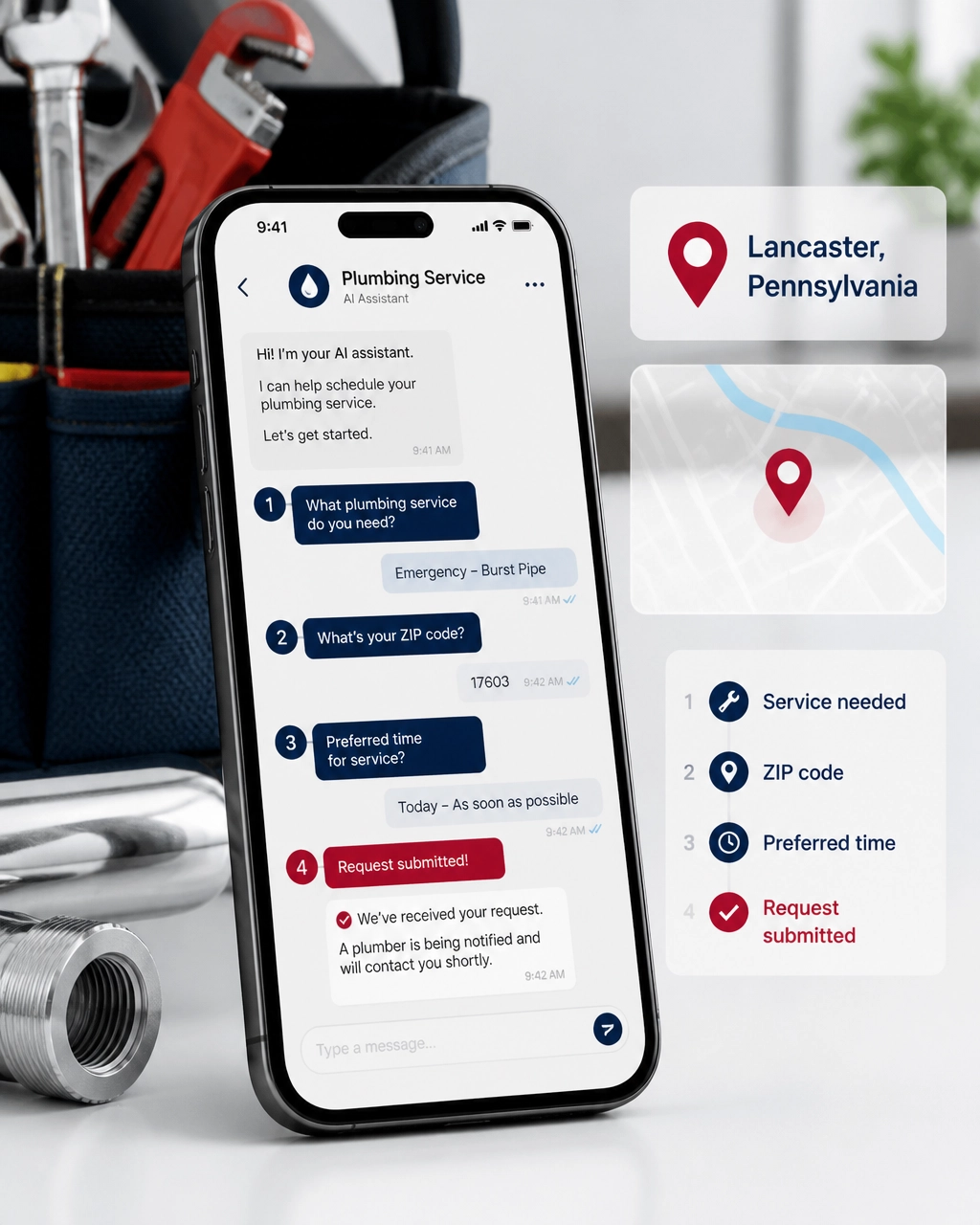
For example, a plumbing agent can ask whether the request involves a burst pipe, clogged drain, water heater, or another issue. A law firm’s agent may collect the general case type and preferred consultation time without giving legal advice. An ecommerce agent can answer product questions and guide shoppers toward checkout.
The goal is not to sound robotic. The goal is to remove friction.
Speed matters because high-intent prospects often contact several businesses at once. An AI agent can acknowledge an inquiry immediately, even when your crew is on a job or your office is closed.
This creates a better first impression and gives your business a chance to stay in the conversation.
Track:
Do not assume automation automatically improves performance. Measure the difference before and after implementation.
Your staff should not have to begin every call with, “So, what do you need?”
An AI agent can collect useful context first:
That information helps your team prioritize urgent jobs and prepare for more productive conversations.
Many small businesses do an excellent job delivering their service but struggle with consistent follow-up. Marketing automation can send a confirmation, reminder, helpful resource, or human callback notification based on the lead’s activity.
For example:
This is where AI marketing becomes a system rather than a single tool.
An AI agent cannot fix a confusing website, inaccurate business information, or a poor customer experience. It is more like a new employee joining your front office: useful, but only when you give it clear processes and reliable information.
Your website should make the next step obvious. Use clear service pages, strong calls to action, mobile-friendly forms, and visible phone numbers.
Premier Marketing Group provides custom website design and small business website support designed around usability and conversion, not just appearance.
Prioritize these improvements:
A visitor should never have to hunt for how to contact you.
Your AI agent may capture the lead, but local SEO helps the prospect find you in the first place.
Your local search foundation should include:
Our local search visibility guide explains how relevance, distance, prominence, reviews, and profile completeness influence local discovery.
You should also consider GEO, or generative engine optimization. Search experiences increasingly summarize information for users, so your business needs clear, trustworthy, well-structured answers across its website and public profiles.
The Duke University CMO Survey found that AI and machine learning currently power 17.2% of marketing activities, with marketing leaders projecting that figure to reach 44.2% within three years. The opportunity is not simply to “use AI.” It is to make your business easier for both people and search systems to understand.
AI agents are most effective when they work with the rest of your marketing.
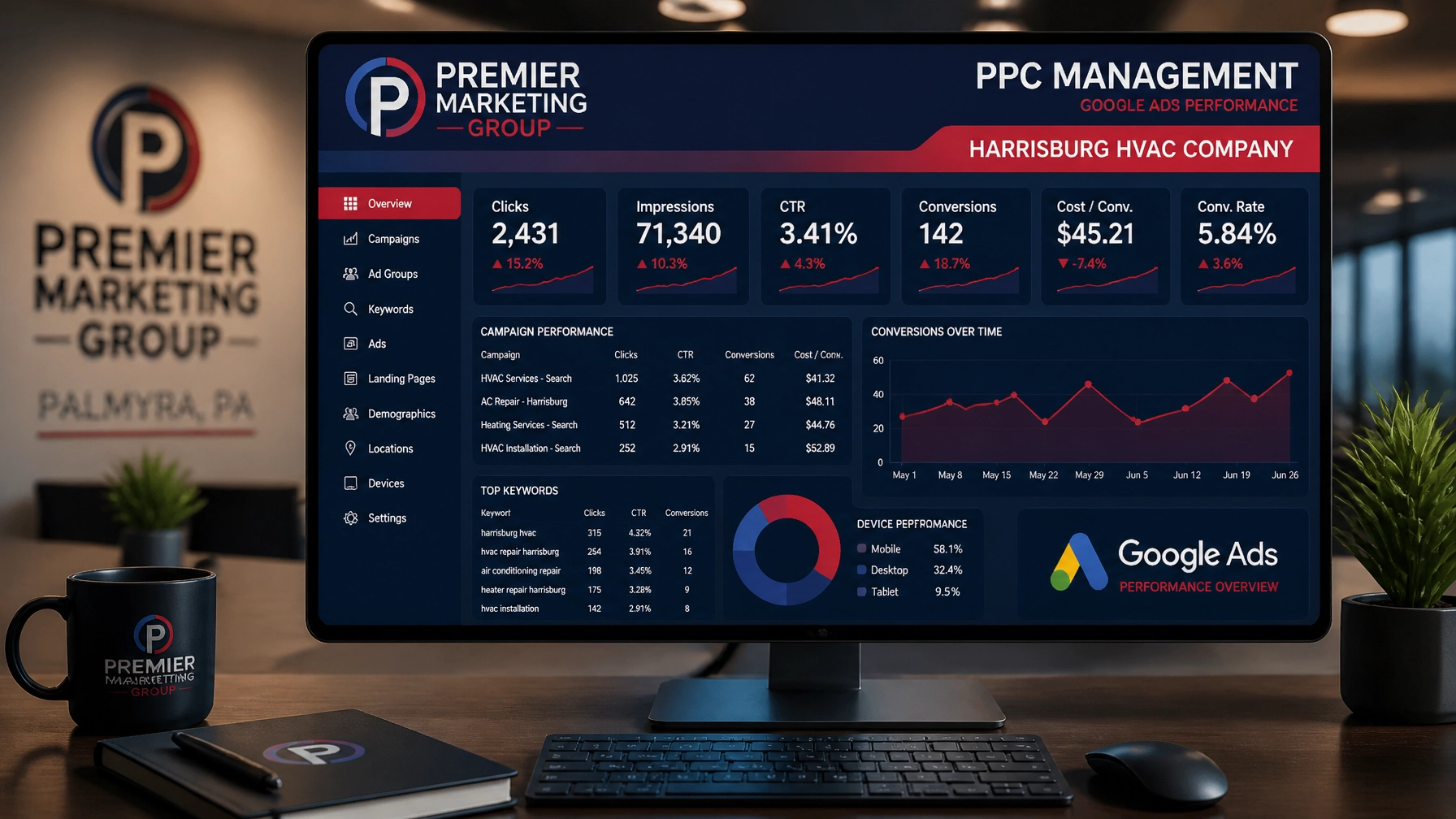
A strong PPC management strategy can send paid traffic to focused landing pages. An AI agent can then answer questions and qualify those visitors.
Your reputation also matters. BrightLocal’s 2025 Local Consumer Review Survey found that 6% of consumers used ChatGPT or other AI tools to find reviews for local businesses. While Google remains central to local discovery, your reviews and public information still shape trust across many channels.
Use reputation management for businesses to monitor feedback, respond professionally, and create a steady process for requesting authentic reviews.
Your visual identity matters, too. Whether you search for a branding agency near me or work with a broader partner, make sure your website, ads, emails, and AI responses sound and look like the same business.
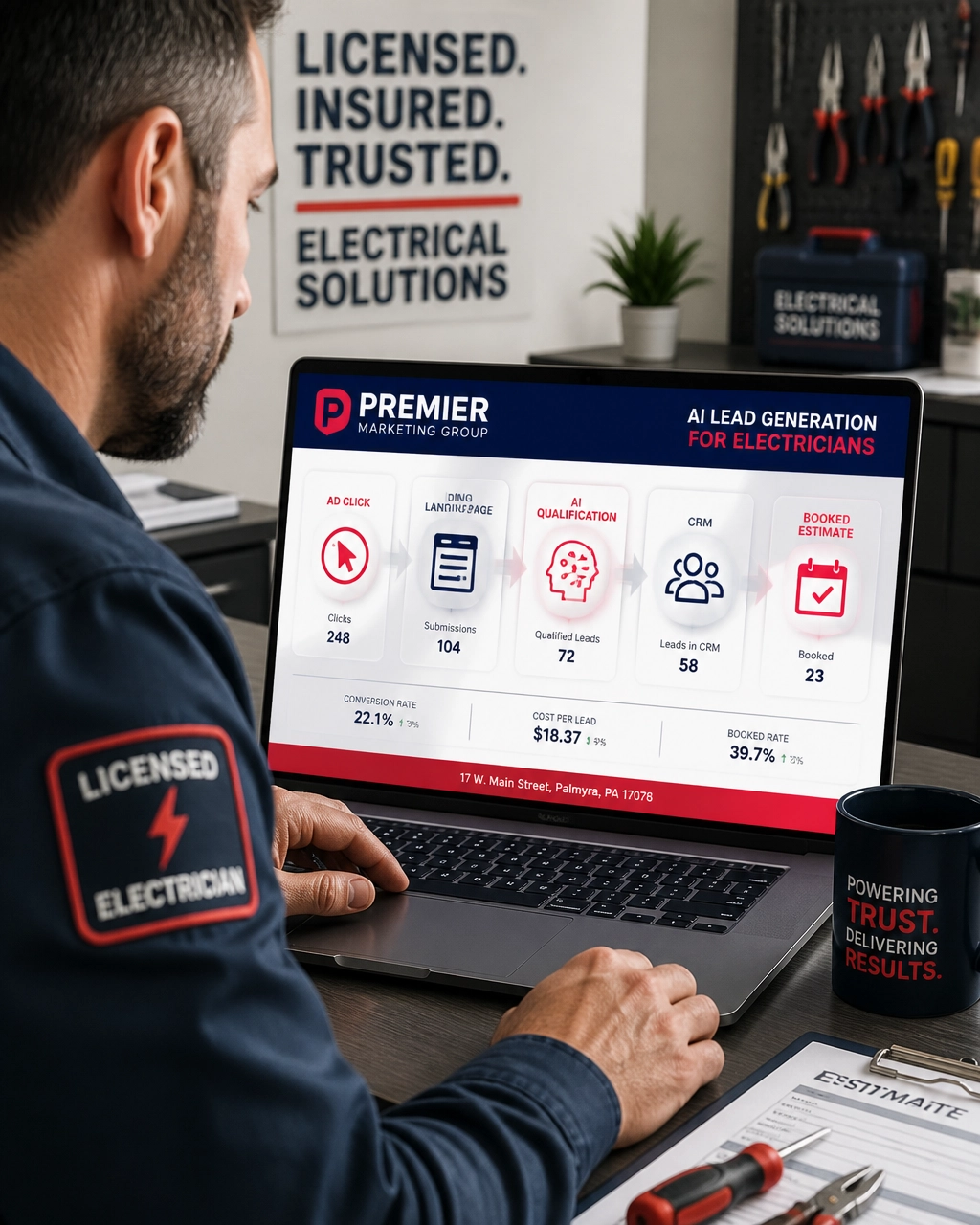
You do not need to automate everything at once. Start with the highest-value customer journey.
Review the last 30 days of inquiries. Look for:
This audit shows where AI can create the fastest improvement.
Start with one task, such as:
A narrow workflow is easier to test and improve than an agent that tries to answer everything.
Define what the agent can and cannot do. It should not invent pricing, promise appointment times without confirmation, provide legal or medical advice, or make claims your business cannot support.
Include a clear human handoff for sensitive or complex questions.
Depending on your business, the agent may connect with:
For growing online brands, an experienced ecommerce development company can help connect customer journeys, product data, and conversion tracking.
Review conversations weekly. Look for repeated questions, confusing answers, abandoned forms, and leads that were incorrectly classified.
AI marketing is not “set it and forget it.” It improves through accurate data, thoughtful testing, and human oversight.
No. A well-designed agent handles repetitive first steps so your employees can focus on skilled conversations, service delivery, and relationship building. The best systems make human help easier to reach, not harder.
No. Small businesses often benefit because they have fewer people available to answer every inquiry. A focused agent can support a local company without requiring a large internal marketing or technology team.
Indirectly, yes. They do not replace local SEO work, but they can improve the visitor experience after someone finds you. Your visibility still depends on accurate business information, useful content, reviews, technical performance, and a strong local search strategy.
Pricing depends on the channels, integrations, conversation complexity, and level of ongoing management. Start by calculating the value of missed leads and the time your staff spends on repetitive inquiries. That gives you a more useful budget than comparing software prices alone.
Collect only information you need, disclose how it will be used, limit access, and follow the privacy requirements relevant to your industry. Sensitive businesses should involve qualified legal and compliance professionals before launching automation.
AI marketing is moving from an interesting experiment to a practical part of small business growth. The U.S. Chamber’s 58% generative AI adoption rate among small businesses in 2025 shows how quickly expectations are changing.
You do not need to chase every new tool. Start with one customer journey, one measurable problem, and one clear improvement. Then connect your AI agent to the fundamentals that already drive growth: local SEO, professional web design, PPC management, reputation management, branding, marketing automation, and accurate reporting.
Premier Marketing Group has helped small businesses build stronger marketing systems for more than 10 years. If your business is bleeding visitors through slow responses or missed follow-ups, schedule a marketing consultation and identify the next practical step.
Your next level may begin with answering the lead you are currently missing.