Ecommerce platform for distributors has become essential as B2B buyers demand the same fast, personalized experience they get as consumers. Nearly half of all B2B researchers are millennials who expect 24/7 online purchasing capabilities and streamlined self-service options.
Top ecommerce platforms for distributors include:
The numbers tell the story clearly. Statista estimates that B2B ecommerce will grow to $3.1 billion in the U.S. by 2027. Mobile now drives over 40% of revenue in leading B2B organizations, while 70% of B2B search queries come from mobile devices.
But here's the challenge: Most distributors face pressure to create efficient digital channels while managing complex pricing structures, bulk orders, and intricate customer relationships. The old model of phone orders and manual processes simply can't compete with digital disruptors targeting your customers.
The solution isn't just any ecommerce platform - it's finding one designed specifically for B2B complexities. Features like customer-specific pricing, bulk ordering capabilities, ERP integration, and account management separate true distributor platforms from basic online stores.
As Rob Gundermann, I've helped numerous distributors transform their operations through strategic ecommerce platform for distributors implementations, focusing on solutions that drive measurable growth and customer adoption. My experience spans working with businesses that need robust B2B functionality, seamless integrations, and platforms that can handle the unique demands of distribution workflows.
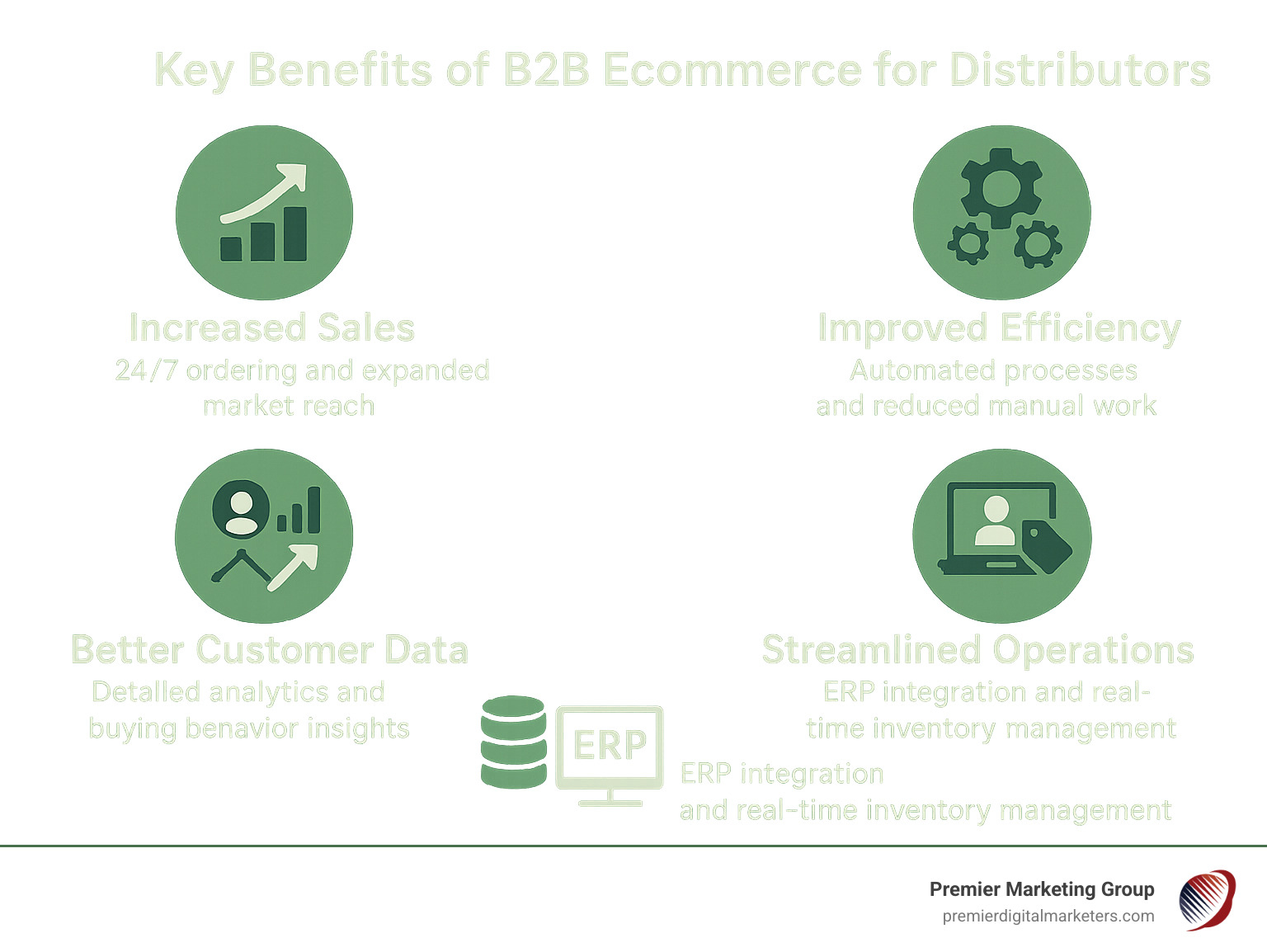
Handy ecommerce platform for distributors terms:
When you sell to other businesses, a web store isn’t just a catalog—it’s a 24/7 digital branch that has to replicate everything your inside-sales team does and more. The platform you pick must tame bulk orders, contract pricing, complex hierarchies, and deep system integrations without extra plugins or endless work-arounds.
Further tips live in our B2B Marketing library.
Accurate pricing is the #1 make-or-break detail for B2B buyers. Your ecommerce engine should:
See how we shape these experiences in our Custom Ecommerce Website Design work.
Long-term B2B relationships involve many users and rules. Look for:
More ideas live under Ecommerce Business.
Pick a platform that does this out of the box, not one that needs months of custom code.
Selecting technology is strategic—get it right and you open up years of scalable growth; get it wrong and you’ll re-platform in 18 months.
Ask these questions before you sit through a single demo:
Need budget guidance? See our detailed Ecommerce Platform Cost analysis.
| Platform Type | Cost Profile | Flexibility | Ongoing Maintenance | Speed to Market |
|---|---|---|---|---|
| Open-Source | Low license, high dev | Unlimited | You own it | Slow |
| SaaS/Cloud | Predictable monthly | Good within limits | Vendor handled | Fast |
| Headless | Variable | Very high | Shared across vendors | Medium |
Open-source suits firms with deep IT benches and unique workflows. SaaS fits teams wanting quick wins without owning servers. Headless or composable lets you mix best-of-breed front-ends with a rock-solid commerce core—ideal when you sell through multiple channels.
Explore market trends in our Ecommerce Platform Market report.
Need a partner? Our Ecommerce Website Development team has launched dozens of distributor sites on time and on budget.
Even the best platform stumbles without a plan. Here are three problems you can clear early.

AI isn’t hype when it boosts revenue:
One-third of ecommerce firms already rely on AI—don’t let competitors take that edge. Dig deeper in our B2B SEO Success in 2023 guide.
The shift to ecommerce platform for distributors isn't just about keeping up with technology—it's about survival in a rapidly changing marketplace. Modern B2B buyers have fundamentally different expectations than they did even five years ago.
Today's B2B buyers want the same smooth, intuitive experience they get when shopping on Amazon or other consumer sites. They expect to research products, compare options, and place orders whenever it's convenient for them—not just during your business hours.
The numbers tell the story clearly. B2B ecommerce already accounts for more than half of all business transactions. Nearly half of all B2B researchers are millennials who grew up with smartphones and expect everything to be available online instantly.
Here's what's driving this change:
Distributors face growing pressure from digital disruptors who are targeting their customers directly. Companies that once relied on distributors are now exploring direct-to-business models, threatening traditional distribution relationships.
The shift also allows distributors to improve operational efficiency dramatically. Instead of sales reps spending hours taking routine orders over the phone, they can focus on building relationships and solving complex customer problems.
Reaching new markets becomes possible when you're not limited by geography or sales rep availability. A robust ecommerce platform can serve customers 24/7 across multiple time zones without additional staffing costs.
Most importantly, distributors gain a competitive advantage by providing value-added services that strengthen customer relationships. Self-service portals, detailed order history, and personalized pricing create stickier customer relationships that are harder for competitors to break.
The biggest mistake I see distributors make is choosing a platform designed for retail customers and trying to force it to handle business complexities. This approach almost always leads to expensive problems down the road.
B2C platforms simply weren't built for B2B needs. They can't handle customer-specific pricing, complex approval workflows, or multi-user corporate accounts without extensive (and expensive) customization.
I've worked with distributors who spent months trying to adapt retail platforms for their business needs. They end up with clunky user experiences, ongoing maintenance headaches, and frustrated customers who can't complete simple tasks like bulk ordering or accessing contract pricing.
The smart approach is choosing an ecommerce platform for distributors that was built from the ground up to handle B2B complexities. These platforms understand that businesses need features like:
Bulk ordering capabilities that let customers upload CSV files with hundreds of SKUs. Account hierarchies that manage multiple locations under one corporate umbrella. ERP integration that keeps pricing and inventory accurate in real-time.
Another common mistake is focusing only on initial costs instead of total cost of ownership. A cheaper platform that requires constant customization and maintenance often costs more in the long run than a purpose-built B2B solution.
The key is finding a platform that handles your specific industry requirements without forcing you to work around limitations or pay for endless customizations.
An ecommerce platform for distributors transforms your sales team from order-takers into strategic advisors. This shift is one of the most powerful benefits of implementing the right platform.
Think about how your sales reps currently spend their time. They're probably handling routine tasks like checking inventory, providing pricing quotes, and processing standard reorders. These activities don't require their expertise or relationship-building skills.
When customers can handle these routine tasks through self-service portals, your sales team gets freed up to focus on high-value activities. They can spend time consulting with key accounts, identifying new opportunities, and building the strategic relationships that drive long-term growth.
The platform also provides sales teams with powerful data they've never had access to before. They can see exactly what customers are browsing, which products they're interested in, and how their buying patterns are changing over time.
This information enables much more targeted and effective sales strategies. Instead of making cold calls, reps can reach out when they notice a customer viewing new product categories or when purchase patterns suggest an opportunity for upselling.
Modern platforms include sales representative portals that make reps more effective when they do interact with customers. They can create orders on behalf of customers, access complete purchase history, and manage accounts more efficiently than ever before.
The result is a sales team that's more productive, more strategic, and more valuable to your customers. They become consultants who provide real expertise rather than just processing transactions.
Think of it this way: getting the right ecommerce platform for distributors isn't just a good idea anymore – it's absolutely essential for staying competitive and growing. The numbers don't lie – Statista predicts B2B ecommerce will skyrocket to $3.1 billion by 2027. Distributors who don't adapt risk falling behind competitors who accept these new digital ways of doing business.
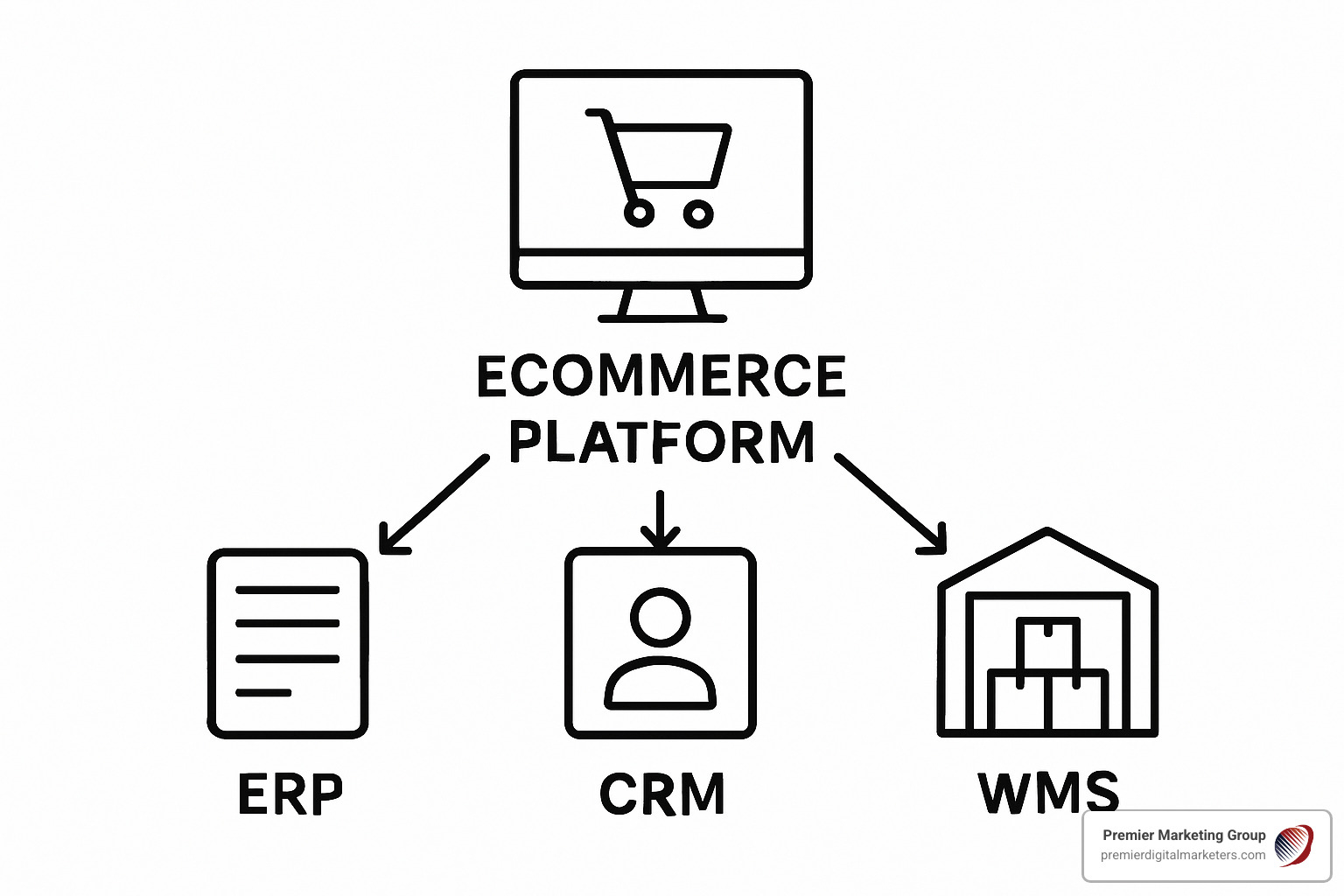
Imagine a powerful digital branch that's always open, serving your customers exactly how they want to be served. By choosing a platform with B2B-specific features like handling complex pricing, making bulk orders easy, and managing detailed account hierarchies, you can build just that. When your new platform seamlessly connects with your existing ERP, CRM, and WMS systems, you get smooth operations and the real-time information your customers expect.
The most successful digital changes always put the customer first. This means having a website that looks great and works perfectly on mobile devices, offers intuitive navigation, and provides easy self-service options. 70% of B2B search queries now come from mobile phones, so being mobile-ready isn't just a bonus – it's crucial for winning over today's buyers.
And let's not forget the magic of AI! Features powered by Artificial Intelligence, like personalized product recommendations, smart search functions, and even automated customer support, are fast becoming key advantages. With a third of ecommerce companies already using AI for recommendations, embracing this technology can give you a real edge in engaging customers and boosting sales.
Building your future-proof digital branch requires careful planning, the right technology, and a commitment to making things better over time. You know, many ecommerce projects don't crash and burn loudly. Instead, they often fizzle out quietly, causing endless headaches with manual workarounds and frustrating your team and customers. Choosing an ecommerce platform for distributors that's built specifically for B2B needs helps you avoid these common pitfalls.
A well-executed E-commerce Development project is truly the foundation for your future success. The key is to partner with experts who understand both the technical side of things and the unique challenges distributors face.
That's where Premier Digital Marketers comes in. We've had the pleasure of helping distributors across Pennsylvania and beyond steer these digital changes successfully. Our team truly gets the unique challenges you face. We can guide you through choosing the perfect platform, getting it up and running, and making sure it continues to work for you. Our goal is to create solutions that bring measurable results and support your long-term growth.
The shift to digital in B2B distribution is happening fast, and distributors who are ready to accept this change will thrive. Those who wait might find themselves left behind by more agile competitors and changing customer demands. The time to act is now – your digital branch is waiting to open its doors!